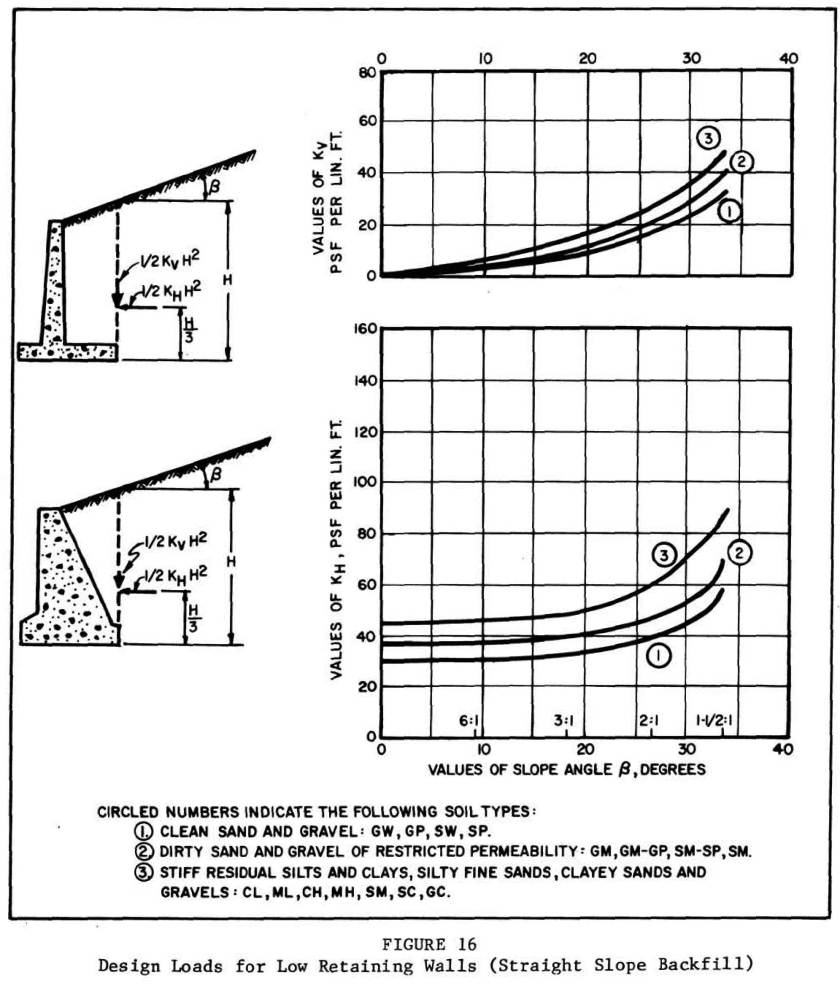
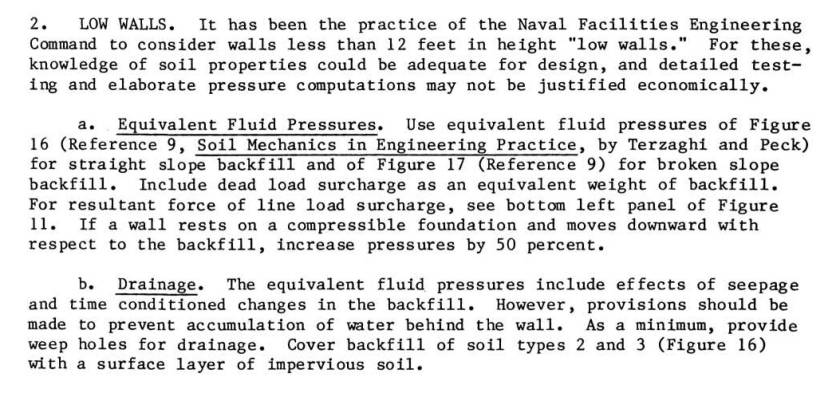
Practitioners who design gravity retaining walls are familiar with the existence of Terzaghi’s “low walls” curves to estimate the equivalent fluid pressure on the wall, horizontal and vertical. The basic chart comes in several versions but the one (for straight backfill) from NAVFAC DM 7.02 is above. The explanation for it (important when one is using it) is below.
In the “slide rule” days, reading charts like this was routine. A better way now, with spreadsheets abounding, is to have a formula available. Some least squares curve fitting correlations are shown below. The variable is the slope angle as shown in the figure. As is the case with the chart, the formulas return and in units of of wall length.
The Esplanade Bridge is a 261-metre-long (850 ft.) road bridge that spans across the mouth of the Singapore River in Singapore with the Esplanade – Theatres on the Bay on its northern abutment and the Merlion on the southern. The 70 metre-wide (230 ft.) low-level concrete arched bridge has seven spans and supports two four-lane carriageways and walkways along both sides. The bridge was built to provide faster vehicular access between Marina Centre and the […]
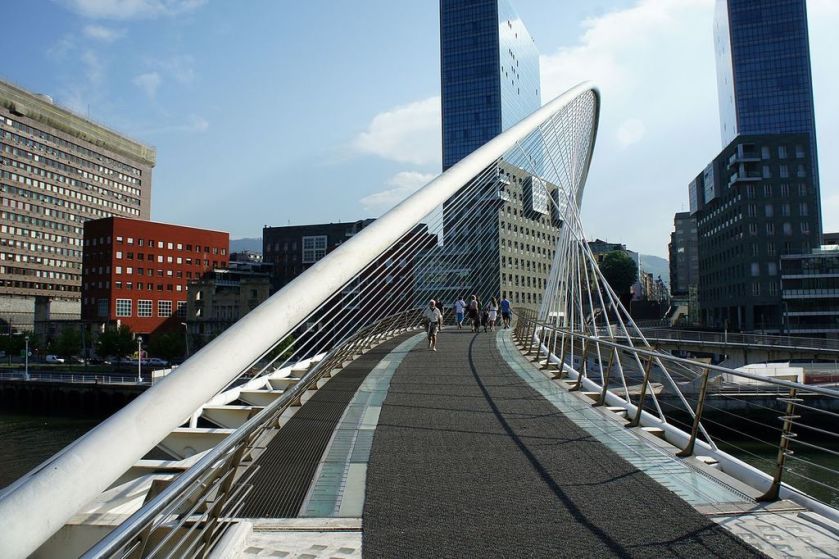
TheZubizuri(Basquefor “white bridge“), also called theCampo Volantin BridgeorPuente del Campo Volantin, is atied archfootbridgeacross theNervion RiverinBilbao, Spain. Designed by architectSantiago Calatrava, the bridge links theCampo Volantinright bank andUribitarteleft bank of the river.
Opened in 1997, the bridge’s unusual design consists of a curved walkway which is supported by steel suspension cables from an overhead arch. The structure of the bridge is painted white and the bridge deck consists of translucent glass bricks. Access ramps and stairways are located on both banks.
The Zubizuri offers pedestrians a convenient route from hotels to the nearbyBilbao Guggenheim Museum.
Since its opening, it has been subjected to praise as a symbol of the new Bilbao and as a draw for tourism. Architectural professor Alexander Tzonis wrote:[
“The intelligence, vitality, and originality of the bridge’s…
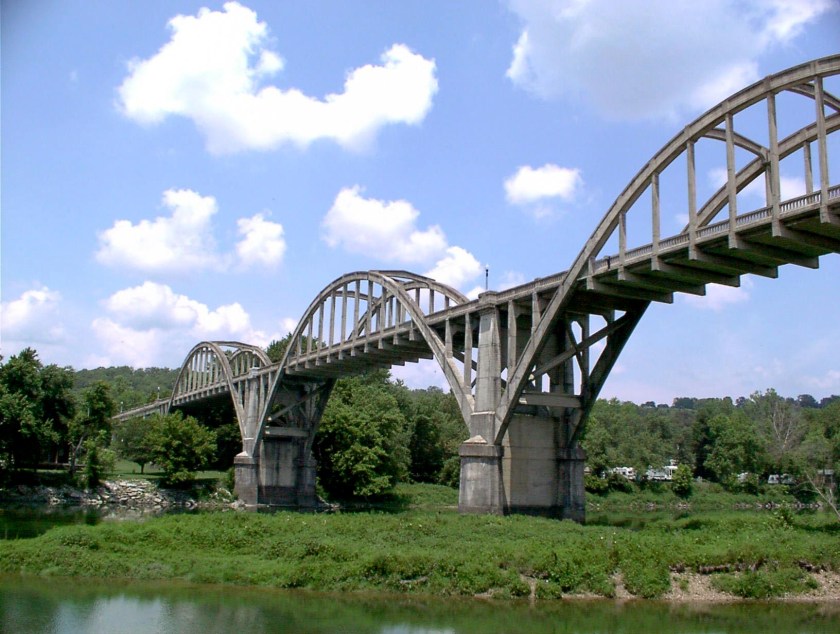
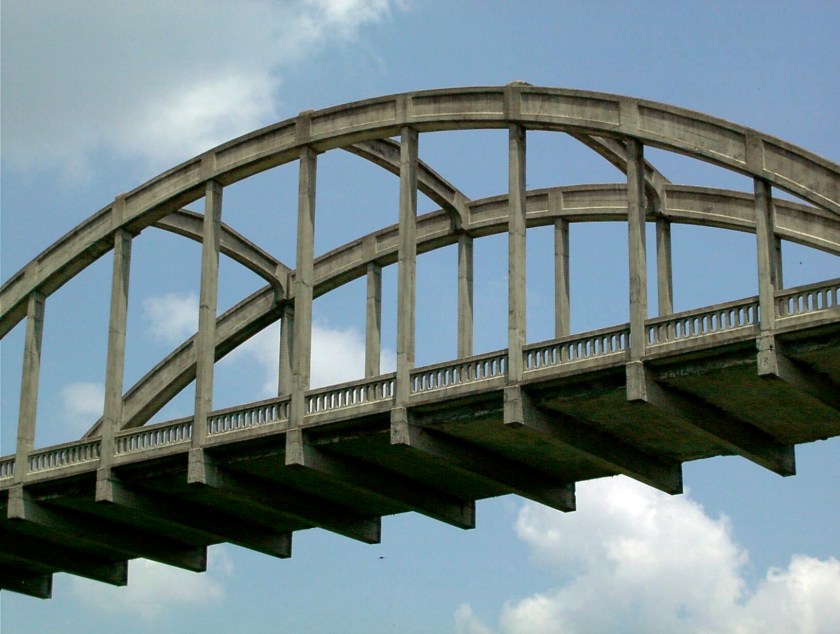
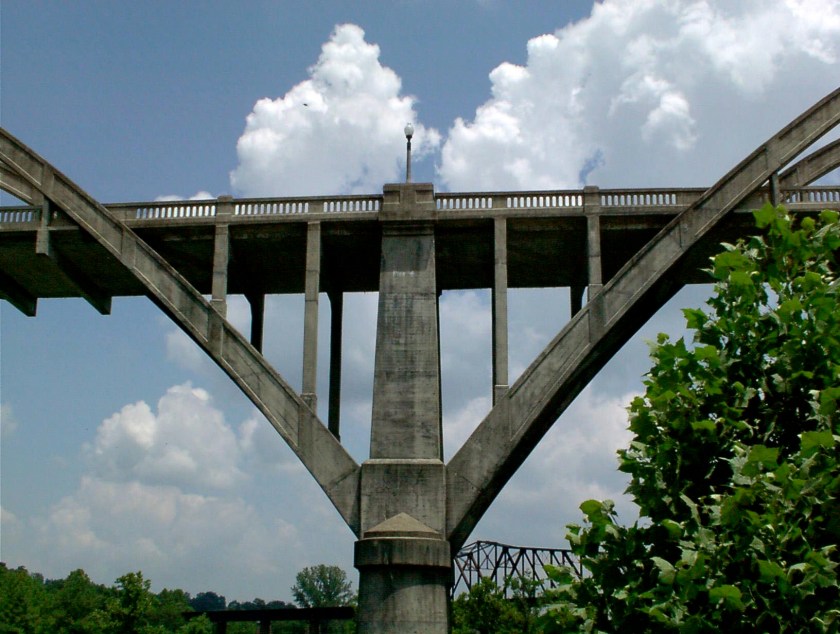
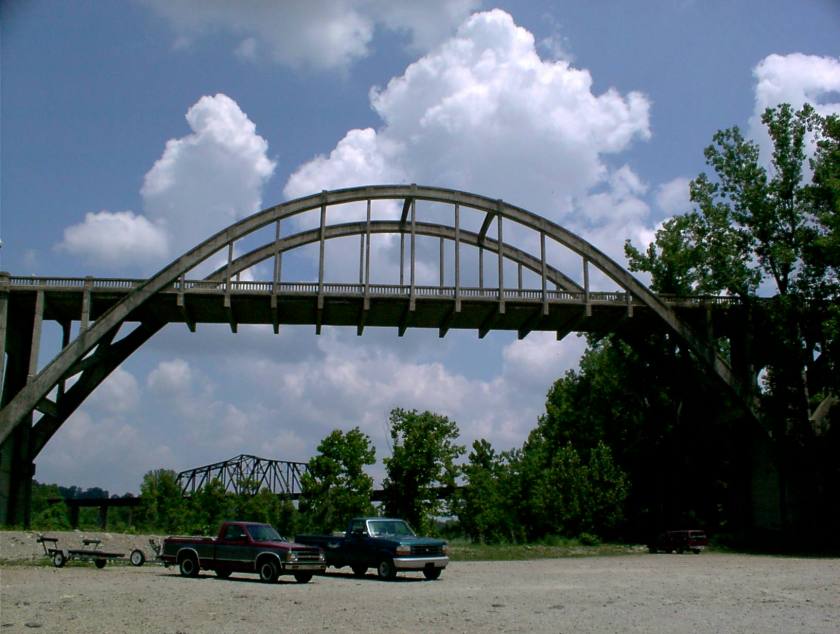
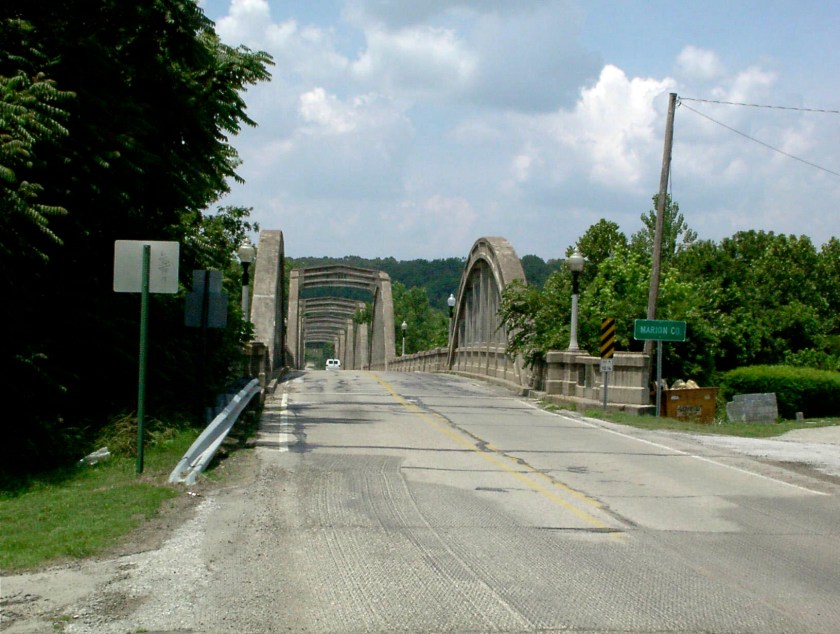
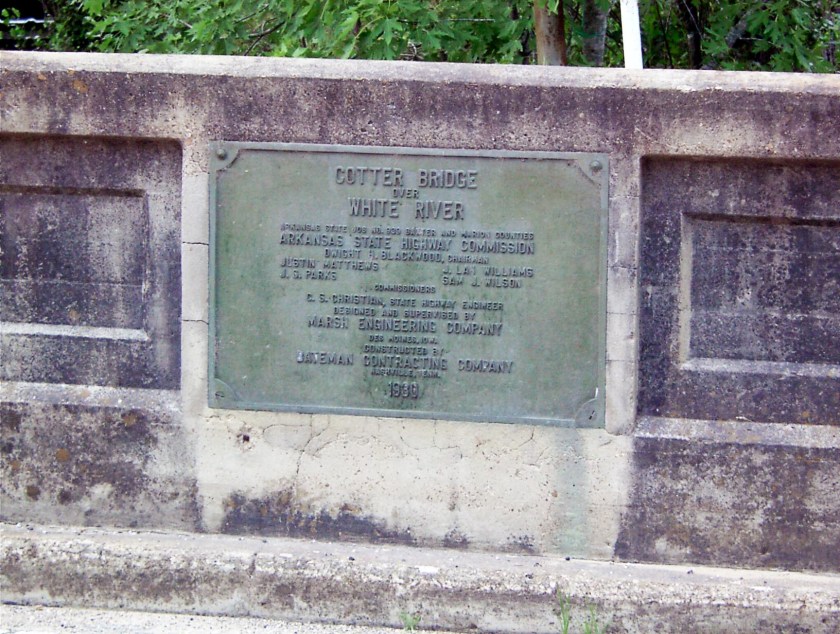
The Ruthven Bridge, as it has been officially called since 1976, is a familiar landmark to visitors and residents of north central Arkansas. It has an interesting history, not only for its design and construction, but also in how it was authorised and its subsequent history.
Arkansas did not establish a State Highway Department until 1927. Before that time the counties were responsible for building and maintaining the roads. One of the Department’s first tasks was to identify places where major bridges needed to be built. One of those sites was the White River at Cotter, west of Mountain Home. (It’s the same White River, and not far from the site, of the real estate development that the Clintons made famous in the Whitewater scandal.)
Unfortunately the State Highway Commission had put the bridge at Cotter at the bottom of the list. This was remedied by Judge R.M. Ruthven, who pocketed the report before the Commission met. Unaware of the priorities of the report, the Commission approved the bridge and construction began.
The bridge was designed by James Barney Marsh, who used a patented design for this reinforced arch bridge. The rainbow concrete arch bridge was meant to be an economical substitute for the steel arched bridges at the time, and had the added advantage of being more corrosion resistant. In addition to the novel design, the bridge was built by first putting in place the steel arch reinforcement and then using that to hang the forms and pour the concrete for the rest of the bridge. This eliminated the use of formwork built from the river bed; the White River’s wild swings in level made that a risky proposition. (Today bridges across rivers and wetlands are generally built from the top down for environmental reasons.)
The bridge was completed in 1930. It eliminated significant detours during flooding; the next bridge crossing was upriver at Branson, 100 miles away. One would think that such an improvement would have been welcome, but traffic was low because the locals preferred to use the ferries, which were paid ferries and slower. The State Highway Department found this frustrating; one highway engineer stated that “If Baxter County people want to new improvements on their highways, they will have to patronise those already made…” The Department was not at a loss for a fix: they paid off the ferry operators to get out of business, the last one for USD250.00. With that traffic picked up, and it remained the main crossing between Baxter and Marion counties until the 1980’s.
It’s strange that, in these days of “free stuff” most systems, religious and secular, need a payment. Beyond the usual griping about taxation, we pay a great deal of “rent” for many things: housing, Internet and data service, utilities, and the like. Most religious systems are this way. They require that we do certain things to get a temporal or eternal reward.
Christianity has never been like this because Jesus Christ paid the price for our sin on the Cross. “The Divine Righteousness which is bestowed, through faith in Jesus Christ, upon all, without distinction, who believe in him. For all have sinned, and all fall short of God’s glorious ideal, But, in his loving-kindness, are being freely pronounced righteous through the deliverance found in Christ Jesus.” (Romans 3:22-24, TCNT.) That work is complete. We don’t have to pay the ferry operator anything to get from this side of eternity to the other. In fact, like the residents of north central Arkansas, we don’t have to take the ferry; the bridge was built and paid for. “But, when Christ came, he appeared as High Priest of that Better System which was established; and he entered through that nobler and more perfect ‘Tabernacle,’ not made by human hands–that is to say, not a part of this present creation. Nor was it with the blood of goats and calves, but with his own blood, that he entered, once and for all, into the Sanctuary, and obtained our eternal deliverance.” (Hebrews 9:11, 12, TCNT.)
Many of you—and I know this was an issue in my own family—have been trying to get to where you want to go by paying something, whether money, time (think about all that “volunteer” work you’ve done to pad your resumé) or whatever. But the most important destination can be had for free; the choice is yours.
Most of the material for this piece came from Witcher, T.R. (2016) “Arkansas’ R.M. Ruthven Bridge.” Civil Engineering, July/August, 42-45. The photos are mine.
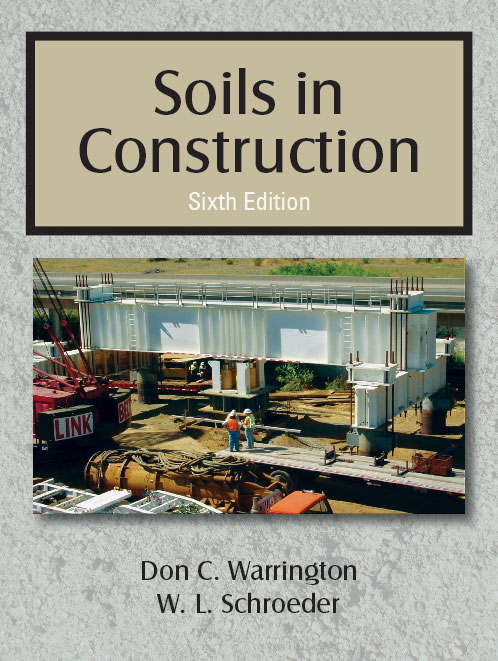
Many of you (and especially those who are familiar with the companion site vulcanhammer.info) are aware that I’ve spent much of my career in geotechnical engineering and deep foundations dealing with contractors. As such I am both sympathetic with their situation and also aware that they need good information to make decisions that can “make or break” a job or their company. It was for that reason and more that I was very happy to be invited to co-author the Fifth Edition fifteen years ago and to help prepare this revision as well.
Soils in Construction is designed to teach the basics of soil mechanics and foundation design to construction management students and to be a reference for those “in the field.” It takes a practical approach to the subject, and it also deals with “temporary works” such as dewatering and cantilever sheet pile walls that many design engineers are unfamiliar with.
There will be more resources for this book available, both from Waveland Press and on this site as well; I’ll keep you posted. Waveland has been great to work with and I appreciate the effort they have put into the book. But the one person I want to say special thanks to is Lee Schroeder, Professor Emeritus (and former Interim Athletic Director) at Oregon State University. Eminent in his own right outside of the book (he’s the Schroeder of the Schroeder-Maitland method for cellular cofferdams,) his vision for the original work, his practical and experienced implementation of same, and his graciousness and support in allowing me to be a part of this project are deeply appreciated.










 vulcanhammer.net