Posted in Academic Issues, Geotechnical Engineering, Soil Mechanics

Unified Soil Classification, from NAVFAC DM 7

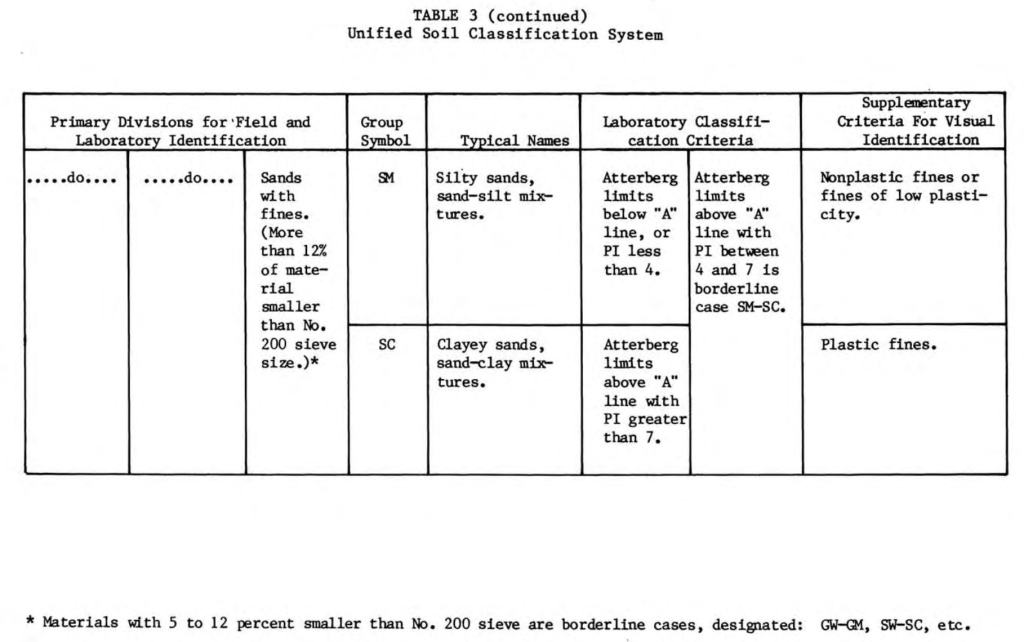
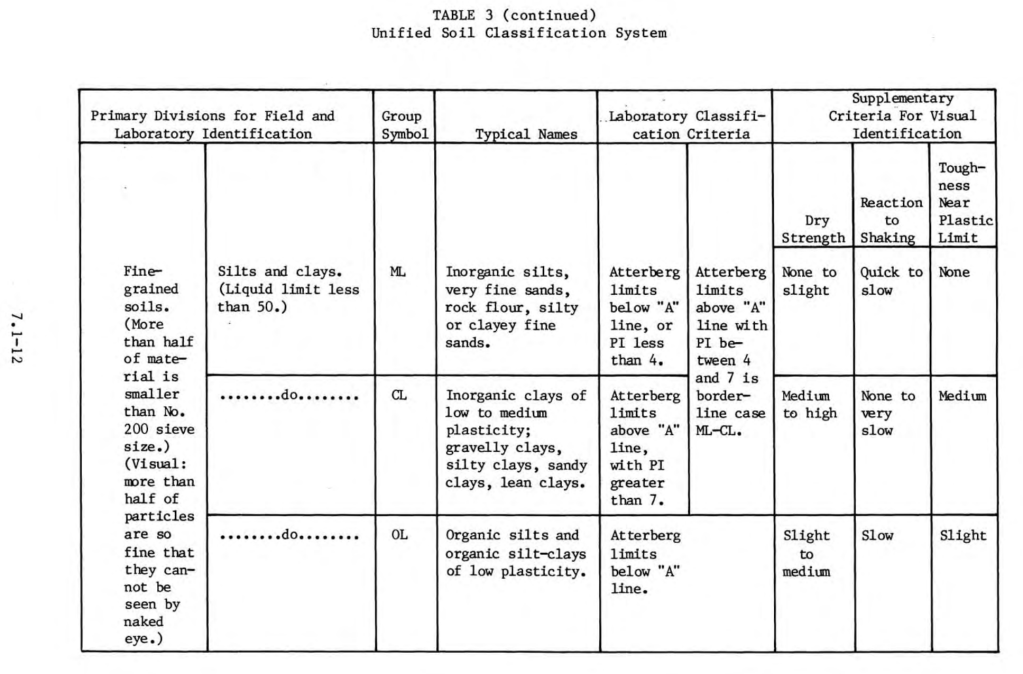
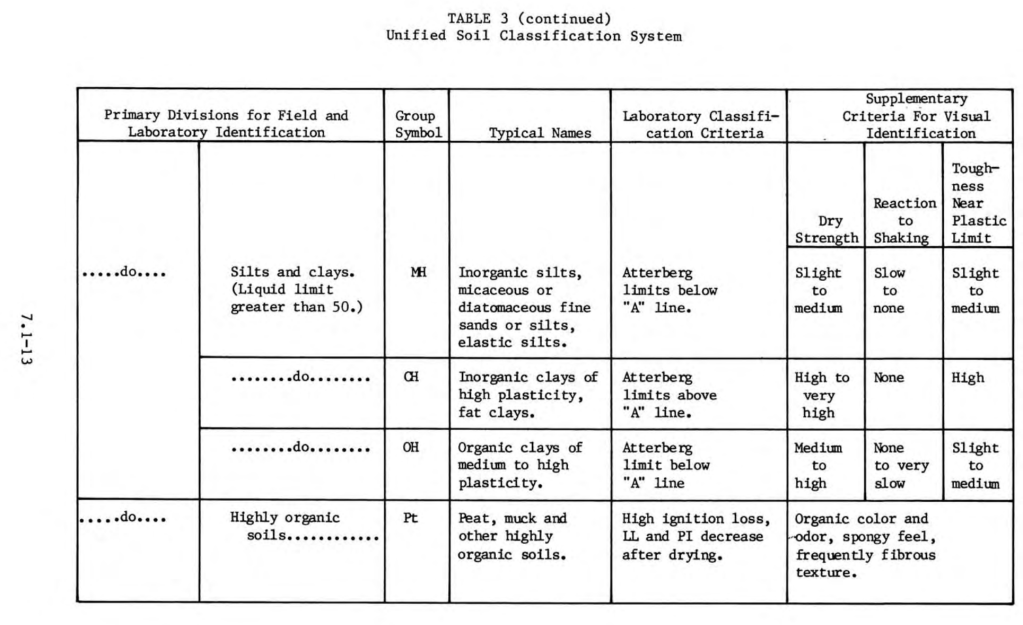
In the course of teaching my Soil Mechanics class, I’ve tried numerous different charts and methods for teaching the Unified system of soil classification. Probably the most success I’ve had is with the one from NAVFAC DM 7, and it’s below. (I’ve included the plasticity chart for completeness.)

This chart is reproduced (with better typography) in my book Soils in Construction. Unfortunately ASTM has been messing with this procedure, and for that reason I have had to shift to it in the last years of teaching Soil Mechanics. I still prefer this NAVFAC chart because it reduces soil classification to a straight-up process of elimination rather than the “decision tree” approach ASTM apparently prefers. NAVFAC DM 7.1, the newer edition, has gone with a narrative description of the system (except for the plasticity chart) which is even harder to follow for those just learning the system.
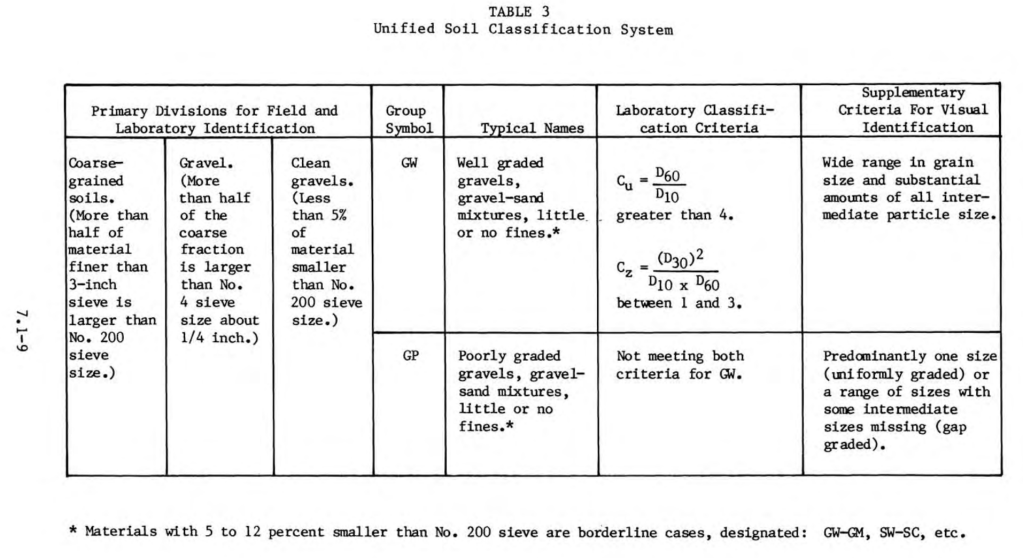
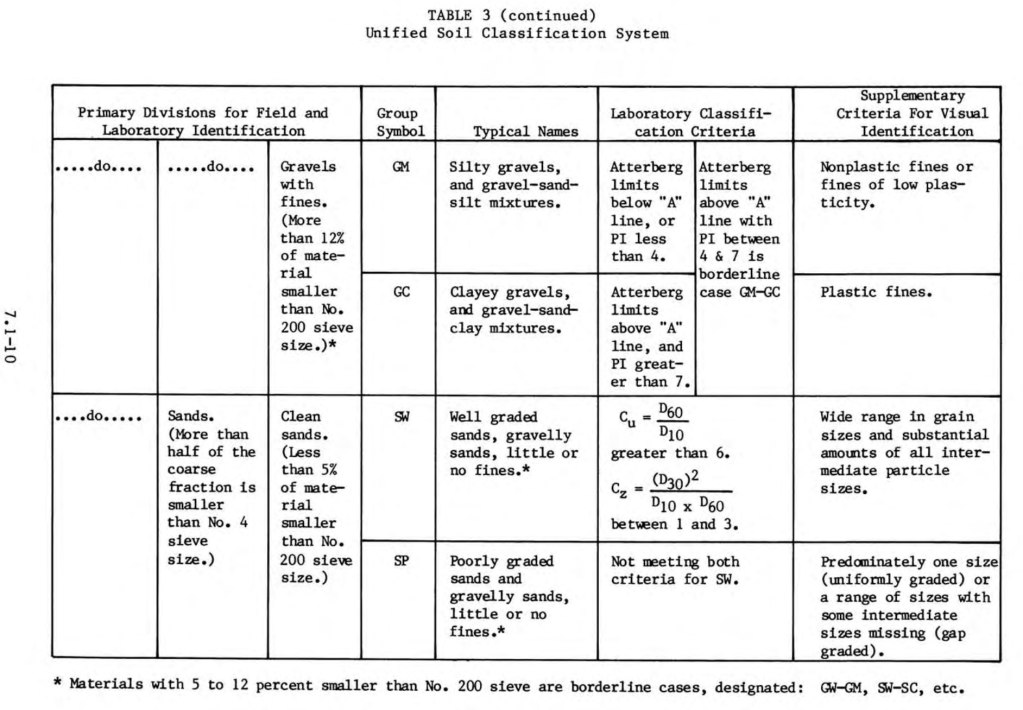
An example of how this works is here.

NAVFAC DM 7 remains a popular reference book for geotechnical engineers, and ordering information is here.
Posted in Academic Issues, Geotechnical Engineering

Weight and Volume Relationships for Soils, from NAVFAC DM 7

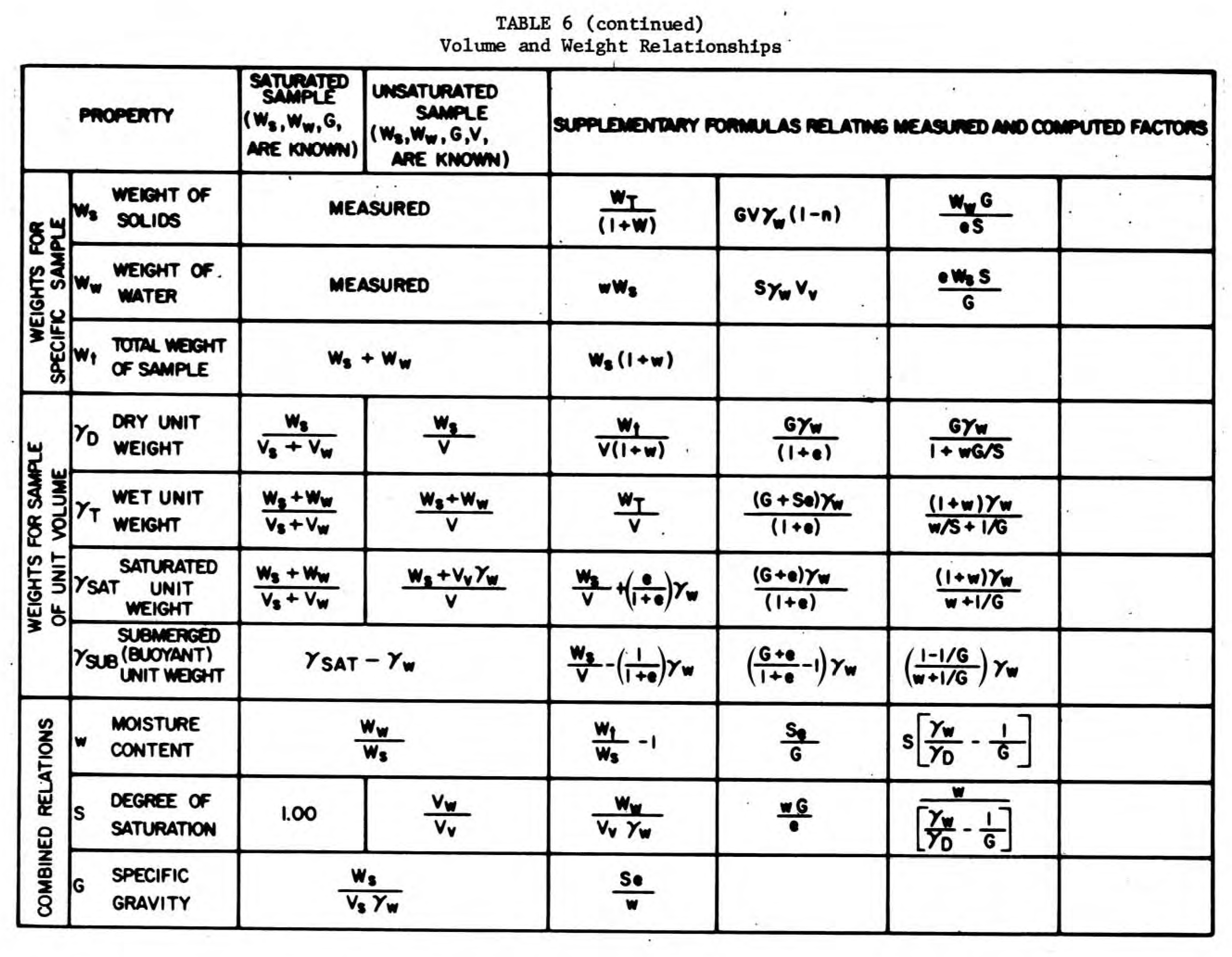
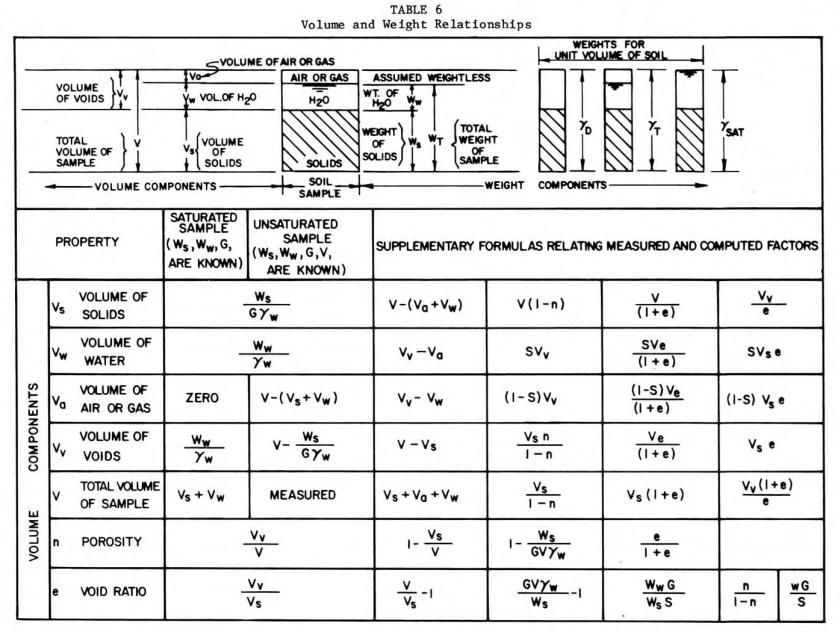
Over the years, student and practitioner alike have to deal with weight and volume relationships in soils and the dimensionless constants (water content, void ratio, porosity, degree of saturation and so forth.) There are many different “cheat sheets” dealing with this, but the best one IMHO is the one from NAVFAC DM 7, presented below.

These were used in Soils in Construction. NAVFAC DM 7.1 presents basically the same data, but there are some formatting problems in the way they are presented. (I’ve generally stuck with the old DM 7, in part, because they’re easier to read in slide format.)

All of the variables you need are defined in the chart. It’s set up for unit volumes, but can be used with densities (but I’d read this first.)

DM 7 remains the single most used reference (directly or indirectly) in the geotechnical world. Click here to see how you can order your copy.

Posted in Geotechnical Engineering

Harry Poulos Receives Prestigious Award from Engineers Australia — GeoPrac.net

Dr. Harry Poulos of Coffey Geotechnics was recently awarded the Peter Nicol Russell Career Achievement Memorial Medal. This award is the highest honor given by Engineers Australia. Dr. Poulous has had a prolific career both […]

Harry Poulos Receives Prestigious Award from Engineers Australia — GeoPrac.net
Posted in Civil Engineering

Those Pesky Kilogram-Force Units — vulcanhammer.info

Generally speaking, engineers educated in the U.S. must be educated in two units: the U.S. system (the Brits abandoned the Imperial system long ago) and the S.I. system, commonly called the “metric system.” I say commonly because they’re not really the same; countries that have been using the system the French came up with it […]

Those Pesky Kilogram-Force Units — vulcanhammer.info
Posted in Civil Engineering

D.D. Barkan’s Dynamics of Bases and Foundations Online

Years ago, when new documents went up on this site, they were announced. Because of the large number of these documents, we haven’t done that in a long time.

This one is special: it is D.D. Barkan’s 1962 classic Dynamics of Bases and Foundations, the translation edited by another “geo-legend,” G. P. Tschebotarioff. It has since fallen out of copyright, which makes it possible to disseminate here. The impact of this book on the subject of Soil Dynamics was considerable at the time and long-lasting. It was also one of the first books to come out of the Soviet Union at a time when few did, and highlighted the advances in vibrational technology that the Soviets were undertaking at the time.

It is our pleasure to pass this along to you, and we trust that you will find it useful all these years after its publication.