
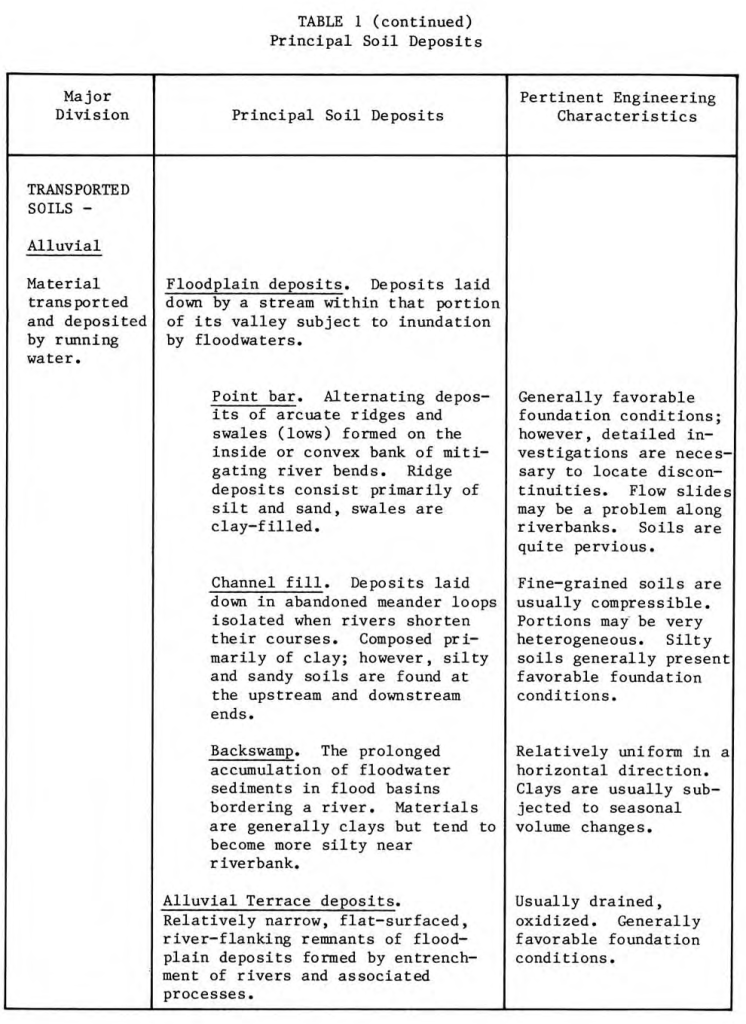
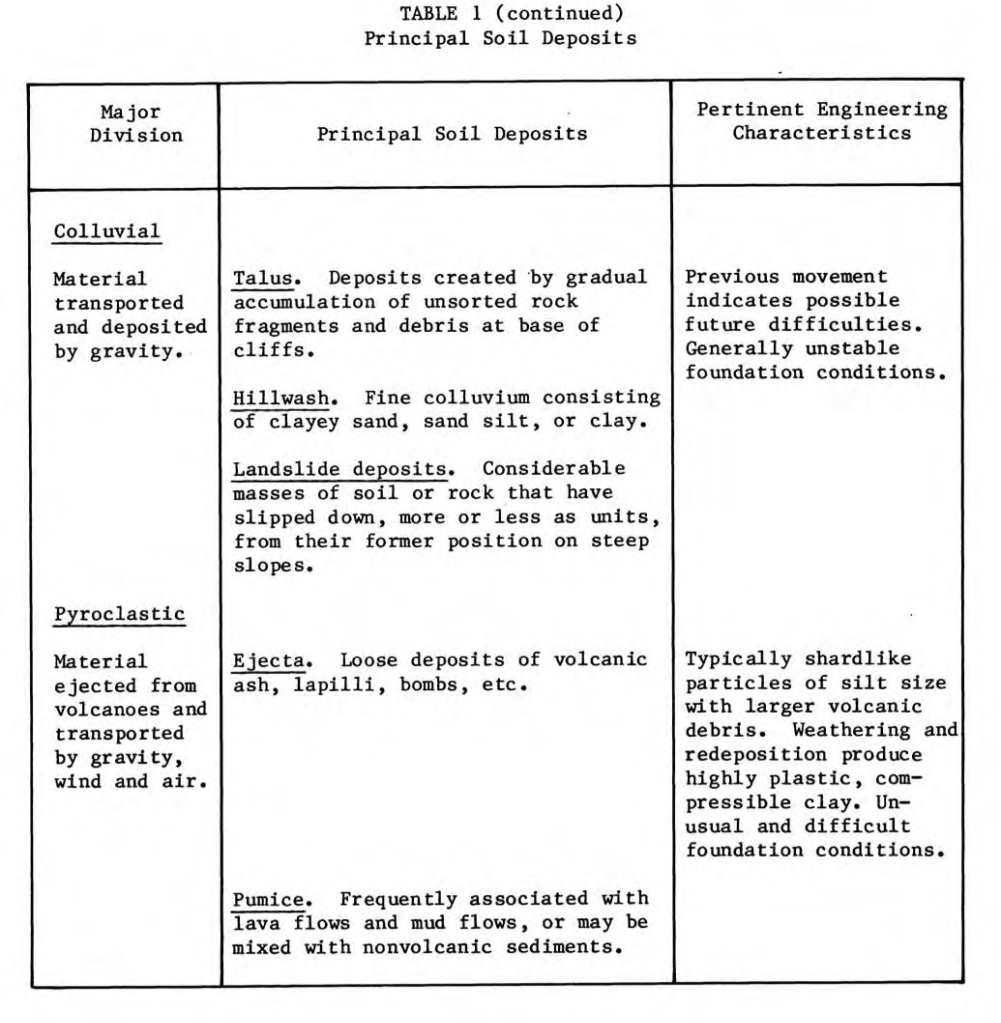
A nice summary of the types of soil deposits we find in the earth, including sedimentary and transported soils.
Category: Geotechnical Engineering



Ohio DOT’s Rendition of the AASHTO Classification System
With the Unified soil classification system, there are many ways of diagramming it. One of those was presented in the last post. With the AASHTO system, there’s generally only one, as shown in the Soils and Foundations Reference Manual. For classification this is pretty much it, but it’s not very informative when it comes to getting a “feel” for what these classifications mean.
Below is a chart from the Ohio Department of Transportation (about the only DOT I know of which uses the AASHTO system for just about everything they do) which describes each AASHTO classification in words and attempts to describe the type of soil for each type in the system.

Unified Soil Classification, from NAVFAC DM 7
In the course of teaching my Soil Mechanics class, I’ve tried numerous different charts and methods for teaching the Unified system of soil classification. Probably the most success I’ve had is with the one from NAVFAC DM 7, and it’s below. (I’ve included the plasticity chart for completeness.)
This chart is reproduced (with better typography) in my book Soils in Construction. Unfortunately ASTM has been messing with this procedure, and for that reason I have had to shift to it in the last years of teaching Soil Mechanics. I still prefer this NAVFAC chart because it reduces soil classification to a straight-up process of elimination rather than the “decision tree” approach ASTM apparently prefers. NAVFAC DM 7.1, the newer edition, has gone with a narrative description of the system (except for the plasticity chart) which is even harder to follow for those just learning the system.
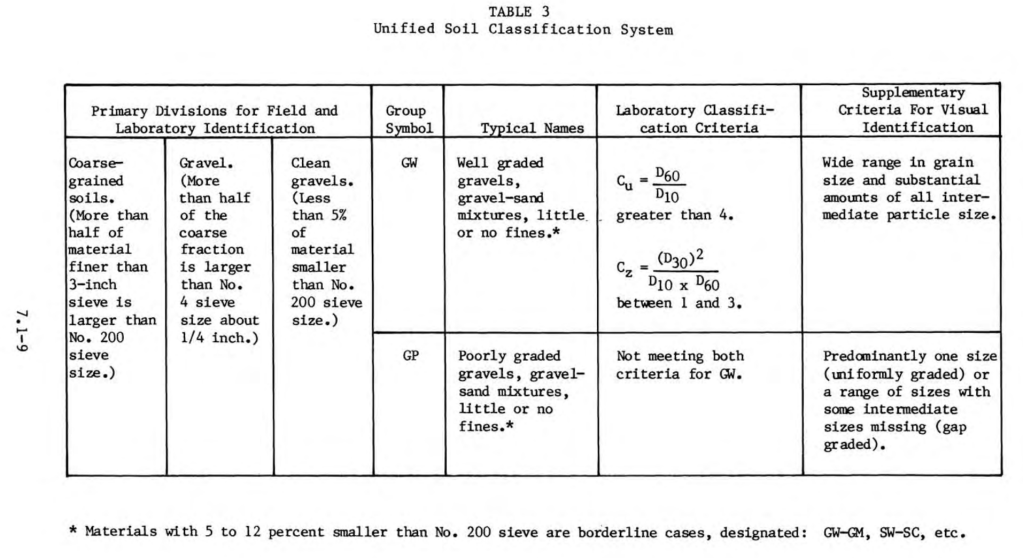
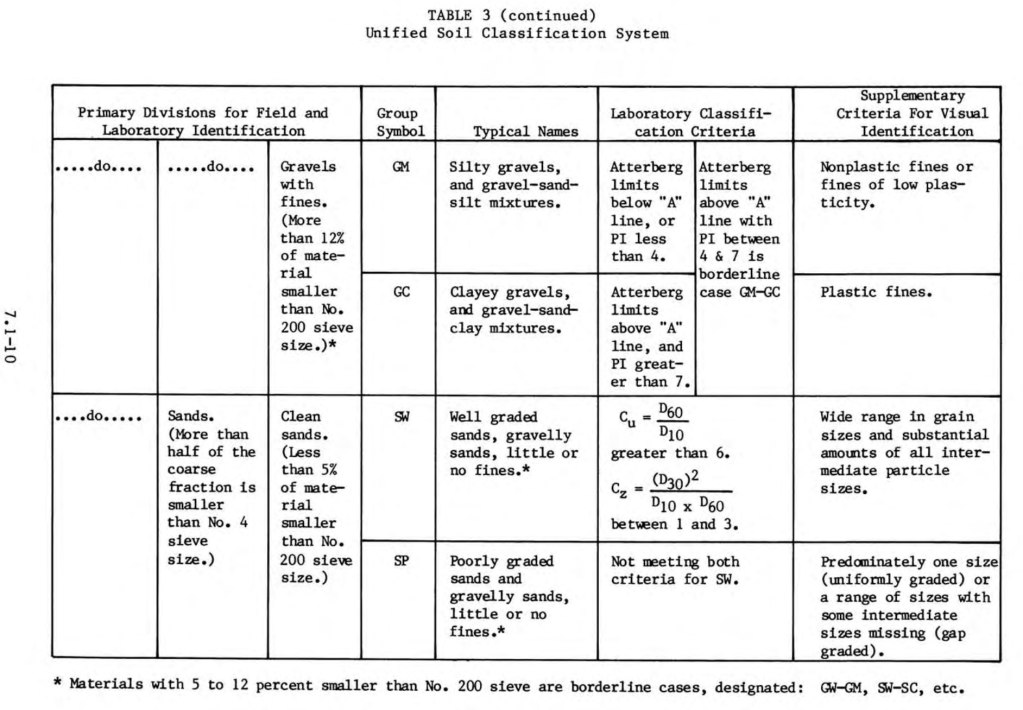
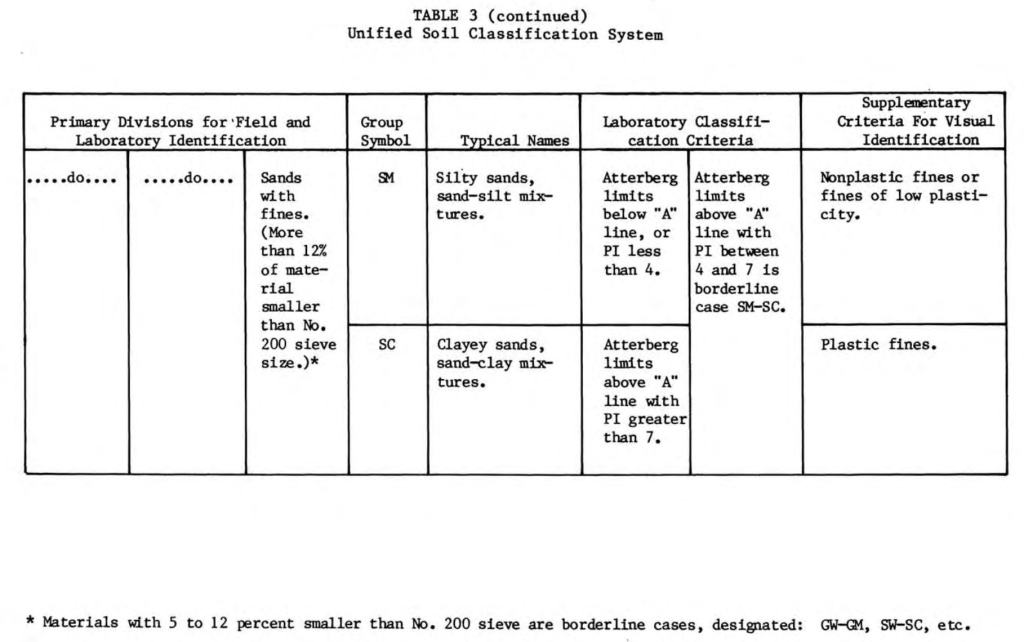
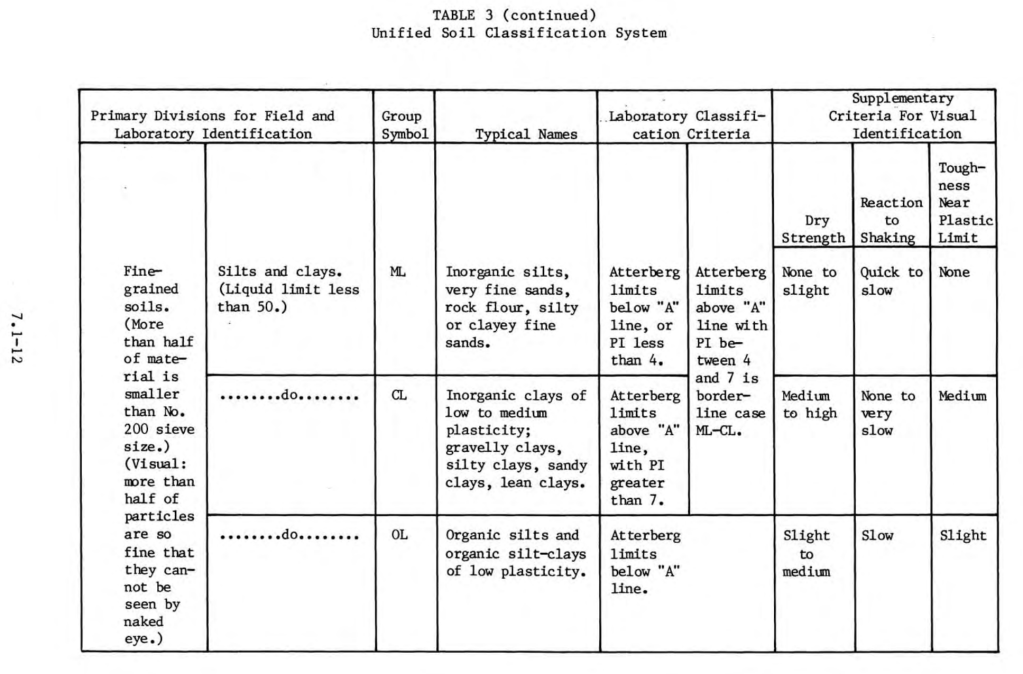
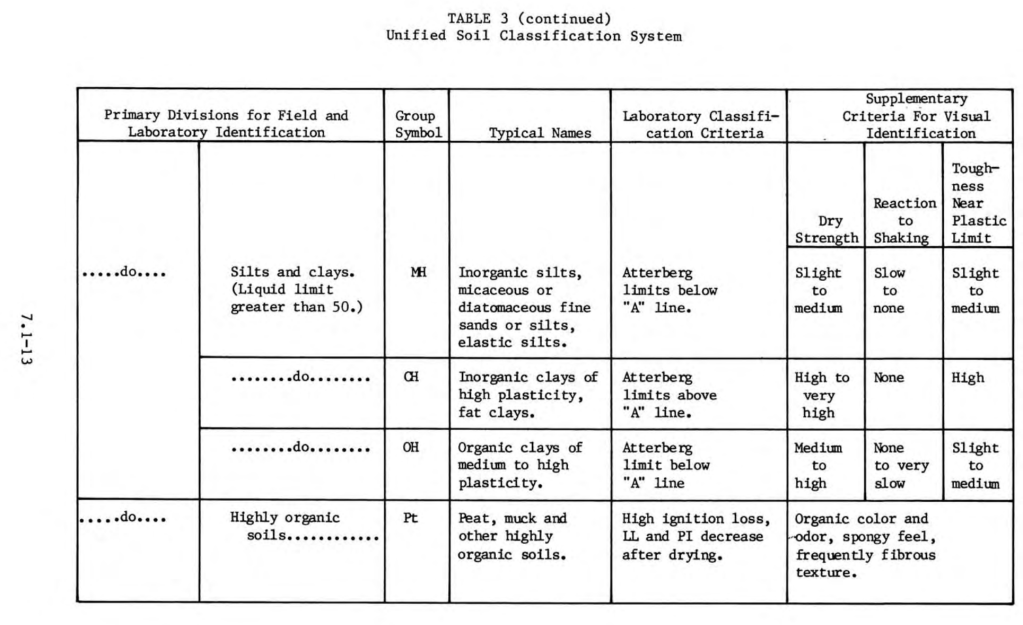

An example of how this works is here.
NAVFAC DM 7 remains a popular reference book for geotechnical engineers, and ordering information is here.
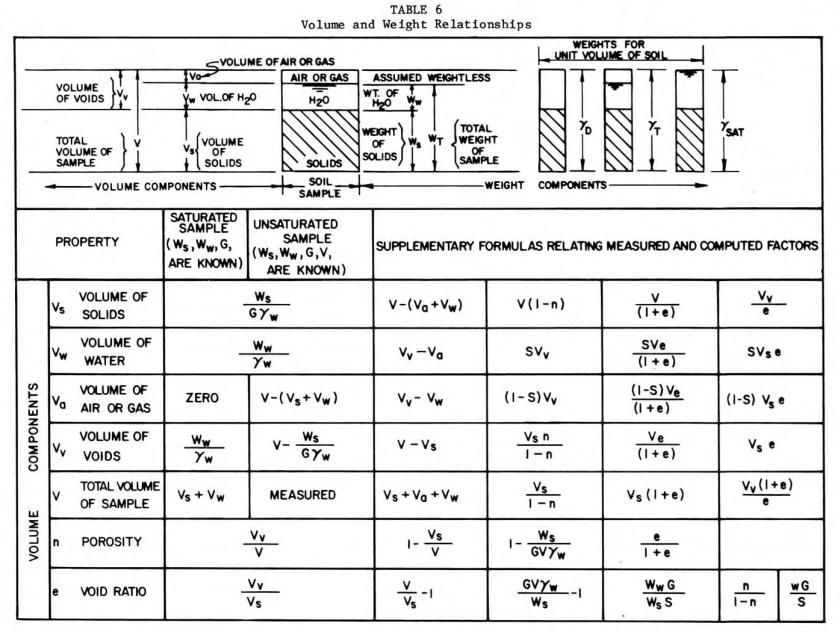
Weight and Volume Relationships for Soils, from NAVFAC DM 7
Over the years, student and practitioner alike have to deal with weight and volume relationships in soils and the dimensionless constants (water content, void ratio, porosity, degree of saturation and so forth.) There are many different “cheat sheets” dealing with this, but the best one IMHO is the one from NAVFAC DM 7, presented below.
These were used in Soils in Construction. NAVFAC DM 7.1 presents basically the same data, but there are some formatting problems in the way they are presented. (I’ve generally stuck with the old DM 7, in part, because they’re easier to read in slide format.)

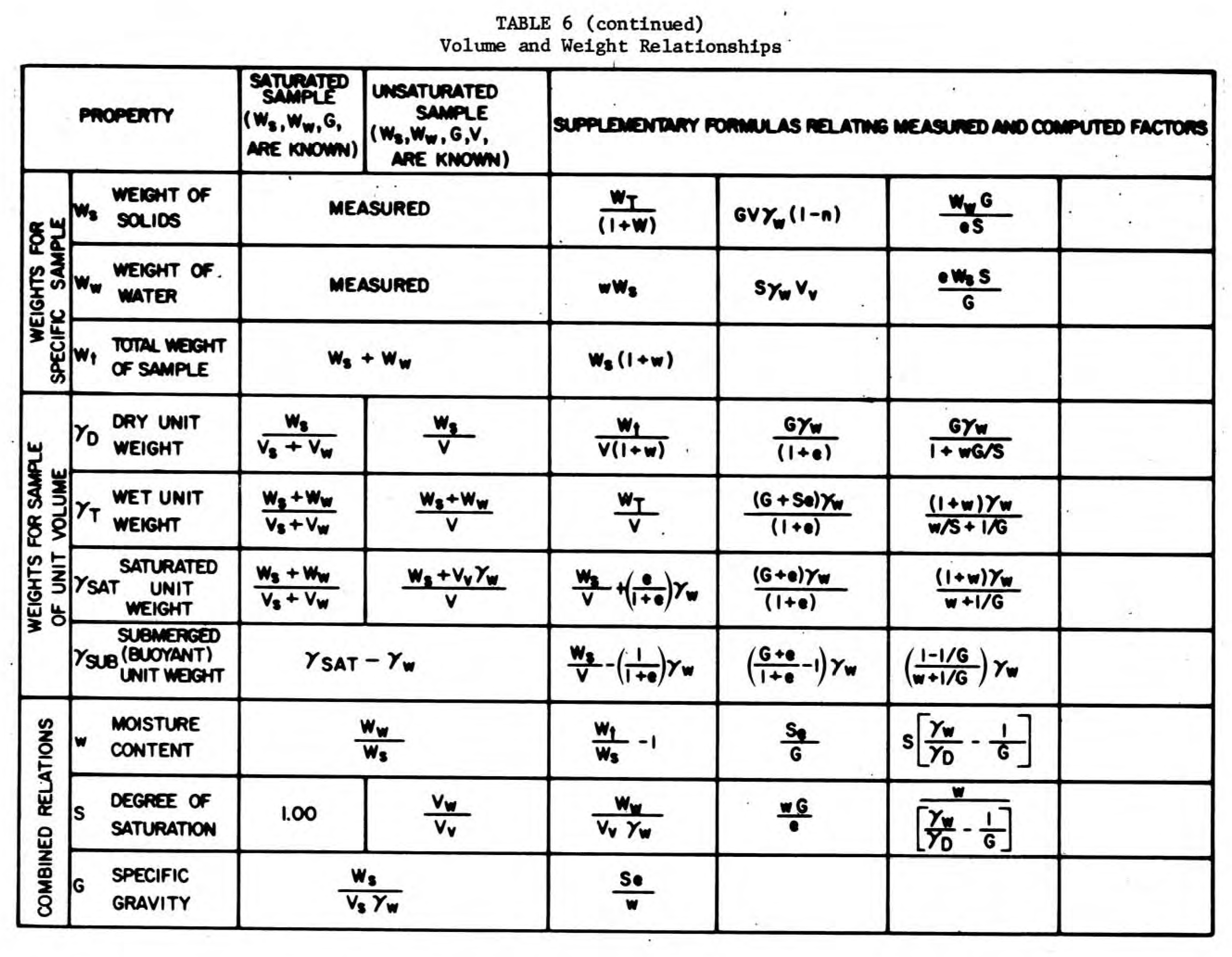
All of the variables you need are defined in the chart. It’s set up for unit volumes, but can be used with densities (but I’d read this first.)
DM 7 remains the single most used reference (directly or indirectly) in the geotechnical world. Click here to see how you can order your copy.
Harry Poulos Receives Prestigious Award from Engineers Australia — GeoPrac.net

Dr. Harry Poulos of Coffey Geotechnics was recently awarded the Peter Nicol Russell Career Achievement Memorial Medal. This award is the highest honor given by Engineers Australia. Dr. Poulous has had a prolific career both […]
Harry Poulos Receives Prestigious Award from Engineers Australia — GeoPrac.net
 vulcanhammer.net