Posted in Uncategorized

Time-Dependent Capacity of Piles in Clayey Soils by Dynamic Methods

M.R. SVINKIN
Consulting Engineer, Cleveland, OH

ABSTRACT: Reliability of dynamic methods for determination of pile capacity is particularly important for piles driven in clayey soils. This paper shows the conditions for proper comparison of static load test and dynamic testing results, analyses the causes of erroneous prediction of pile capacities computed by wave equation analysis, and demonstrates that application of a variable damping coefficient can improve the reliability of wave equation solutions.

1 INTRODUCTION

The capacity of a driven pile changes with time after installation. Soil consolidation and dissipation of excess pore pressure generated during pile driving in the soil-pile interface zone are usually accompanied by an increase in pile capacity. In clayey soils, Seed & Reese (1955) and also Thorburn & Rigden (1980) found an increase in pile capacity (also called setup factor) of up to 6 times over a period of 30 days. In clays, Svinkin et al. (1994) reported the range of setup factors between 4.5 and 11.4 for a period of 22-35 days. Therefore, the assessment of the actual pile capacity after the completion of driving is important for reliable and economic design of pile foundations.

In practice, pile capacity is verified by static and/or dynamic tests. Also, there are predictive numerical computations of the pile capacity such as dynamic formulas and wave equation analysis.

This paper considers some aspects of verification of dynamic testing results and proposes a variable damping coefficient as a way to increase accuracy and reliability of wave equation analysis in predicting pile capacity in clayey soils.

2 ADEQUACY OF STATIC AND DYNAMIC TESTS

It is common in practice to predict the pile capacity by static analysis based on results of in-situ and/or laboratory soil property tests. The static axial load test (SLT) is traditionally used to confirm the computed soil resistance and to determine the service load that can be supported by a pile. The procedure consists of driving the pile to the design depth and applying a series of static loads.

Over the past 30 years, Dr. G.G. Goble and associates pioneered the development of pile capacity calculations from measured force and velocity at the pile head. Dynamic pile testing has become wide spread as a replacement for or supplement to SLT because of its inherent savings in cost and time. Dynamic testing methods are described in Goble et al.(1980), Rausche et al. (1985), Hannigan (1990), Holeyman (1992). These methods allow monitoring pile driving and restrikes, identifying problems during driving, and providing inspection of driving quality for many kinds of piles. To obtain reliable ultimate resistance, it is necessary that the long term pile capacity be fully mobilized. Dynamic testing methods can determine static capacity at the time of testing, at the end of driving or at restrikes. This is a substantial advantage, because dynamic tests can be easily repeated and, consequently, there is an opportunity to obtain pile capacity as a function of time as well as pile embedment.

In spite of a number of problems with implementation of the SLT and interpretation of the ultimate pile capacity, the SLT is considered as the most reliable method to determine pile capacity (Poulos & Davis 1980; Fellenius 1980; Edde & Fellenius 1990).

Because dynamic testing (DT) is often used to replace the SLT, it is important to ascertain the adequacy of both SLT and DT.

Static and dynamic methods to determine the ultimate pile capacity are based on different physical principles, but when both tests are performed on the same pile, they can yield results which together present the pile capacity as a function of time (Svinkin et al. 1994). For different piles driven in clayey soils, time dependent pile capacity can be expressed by relationships such as a linear equation in a logarithmic time scale (Scov & Denver 1988). By way of illustration, the pile capacities from SLT and DT are shown in Figure 1 and Table 1 for a 610 mm square prestressed concrete pile with a 305 mm diameter hollow center. Setup factors were 3.42, 5.73, 6.25 and 6.90 for restrikes 1, 2, 3 and SLT, respectively, Table 1. The depth of pile penetration was 24.4 m, and the soil consisted of about 25.6 m of mainly gray clays followed by a bearing layer of silty sand. The water table was at the ground surface. A Delmag 46-13 hammer was employed for both initial driving and restrikes (RSTR). Driving data are shown in Table 2. In Figure 1, variable t is the time after the end of initial driving (EOID) and for this example t0=1 is the time elapsed after EOID from which an increase in pile capacity is linear on a logarithmic time scale (to=time from EOID to the first restrike in days).

SLT and DT present different ways in determining pile capacity at various times after pile installation, but two principal conditions have to be the same for both kinds of tests. It is absolutely necessary that static and dynamic capacities are being compared only at the same time of testing of both SLT and DT. Moreover, the ultimate pile capacity can be obtained by SLT only if SLT provides the fully mobilized pile capacity similarly to DT.

The adequacy of SLT and DT have to be confirmed by proper correlation of dynamic methods. It is known that dynamic testing methods yield pile capacity only for the time of testing (Rausche et al. 1985, Likins et al. 1988). Some published data demonstrate comparison of SLT and DT results without taking into account the time between different tests (Rausche et al. 1985, Denver & Skov 1988, Hunt & Baker 1988, Hannigan 1990, Paikowsky & Chernauskas 1992, Lee et al. 1996, Liu et al. 1996). Such a comparison is invalid for piles driven in clayey soils because the results of DT do not correspond to those of SLT i.e. soil consolidation is taken into account for DT and is not for SLT. A statistical approach for comparison of SLT and DT results (Likins et al. 1996, Paikowsky & Chernauskas 1996) is also unacceptable for piles in clayey soils, because this approach demonstrates correlation of setup factors rather than correlation of dynamic methods.

In clayey soils, due to consolidation phenomenon, comparison of SLT and DT can only be made for tests performed immediately one after other. In practice, it is sometimes difficult to make two immediately successive tests, but nonetheless the time difference between both comparable tests should not exceed 1-2 days while soil setup changes only slightly. Such comparison of SLT and DT ought to be made in order to clarify the reliability of pile capacity in clayey soils obtained by dynamic testing.

3 PREDICTION OF PILE CAPACITY

Much effort has been made to devise a correlation between pile capacity and penetration resistance for driven piles. Numerous dynamic formulas have been proposed and wave equation methods have been derived.

The dynamic formulas have been widely used to predict pile capacity, however, it is often observed that the dynamic formulas do not provide very reliable prediction since the input variables such a driving energy and a set per blow are not accurately determined (Chellis R.D. 1961, Poulos & Davis 1980).

The main goal in using the wave equation method is to provide a better prediction of the pile capacity, as a function of pile penetration resistance, than can be obtained from classical dynamic formulas. Today, the most commonly used wave equation programs are based on either WEAP (Goble & Rausche 1976) or TTI (Hirsch et al. 1976).

Application of the wave equation to pile driving analysis is based on Smith’s mathematical model of the hammer-pile-soil system (Smith 1960). There is some uncertainty in the wave equation analysis of pile driving because actual efficiency of the entire hammer assembly is unknown (Hannigan et al. 1996). Adjustment of WEAP input with maximum measured values of force, energy and velocity improves WEAP solutions. However, in numerous case histories, computed pile capacity is not equal to the results of static or dynamic tests. It is necessary to make a second adjustment of WEAP input data based on soil parameters (Svinkin 1995) to obtain similar results.

Proper calculation of the dynamic resistance is important for accurate and reliable prediction of static pile capacity. Existing dynamic models of the pile-soil system use a velocity-dependent approach for calculation of the dynamic resistance. This approach requires a damping coefficient for the dynamic resistance during pile driving. There are various linear and nonlinear relationships between damping coefficient and velocity. For a certain pile capacity, the dynamic resistance depends only on pile velocity and the damping coefficient. The pile velocity considered here is the particle velocity at the head of the pile and affects the dynamic shaft and toe resistances.

On the basis of published and measured data, it was concluded (Svinkin 1996b) that peaks of normalized particle velocities along pile shafts are mostly independent of the kind of dynamic testing used and driving conditions with the exception of easy driving. Consequently, measured and computed shaft particle velocities do not reflect soil consolidation as a function of time following pile installation. The pile-soil system changes with time after the completion of driving, but the pile particle velocity stays within a range and is nearly the same for EOID and RSTR. The largest values of particle velocity measured at the pile head and computed along a pile shaft depend mostly on pile parameters and energy transferred to the pile and cannot reflect, by themselves, regain in soil strength and pile-soil adhesion after EOID. However, there are numerous experimental investigations of the Smith soil parameters, damping and quake, for driveability analysis, for example, Litkouhi & Poskitt 1980. Nevertheless, successful in-situ or laboratory measurements of soil parameters does not necessarily guarantee the accurate and reliable prediction of pile capacity. The basic disadvantage of many idealized models is an attempt to select the model parameters in connection with actual soil properties. This can yield acceptable results for some cases, but in general this approach cannot be used to find good correlation between predicted and measured pile capacity after EOID. Neither the pile particle velocity nor a single value of the damping constant can reflect variation of the pile-soil system after EOID.

Though wave equation analysis is an excellent tool for driveability calculations, this method apparently cannot predict reliable pile capacity for various elapsed times after EOID because existing programs, for example, WEAP and TTI do not take into account changes of soil properties after pile installation. The most recent GRLWEAP version of February 1995 uses a setup factor 2.5 for clays and does not require wave equation analysis at restrikes for determining pile capacity. This simple approach is similar to calculation of pile capacity by dynamic formulas and does not demonstrate good GRLWEAP capabilities.

Statistical analysis of a GRLWEAP results (Hannigan et al. 1996) computed for 99 piles driven into various soils has demonstrated that WEAP does not have an advantage in comparison with Gates formula (Poulos & Davis 1980). Mean and coefficient of variation of obtained results are almost the same for both prediction methods.

4 IMPROVEMENT IN WEAP RELIABILITY

Clearly, at each restrike, the pile-soil system has different soil stiffness, damping and mass of soil involved in vibration. For the idealized Smith model, it is desirable to find an appropriate combination of parameter values, mainly paying attention to soil variables, in order to obtain a reliable prediction of pile capacity. Probably, there is no other alternative to enhance prediction accuracy of the dynamic resistance with the particle velocity-dependent approach. The variability of the pile-soil system after the completion of driving can be taken into account by varying the damping coefficient. The damping coefficient should be considered as a function of either time or some other parameter characterizing soil consolidation around the pile. For example, the soil shear modulus or the frequency of the first mode of the pile-soil system could be used (Svinkin 1996a). It is further assumed that the variable damping coefficient is independent of pile velocity.

The dynamic resistance and the damping coefficient as a function of time after pile installation are found on the basis of back-wave equation analysis of the pile-soil system with known pile capacity. Actually, damping and quake determine the soil behavior in the wave equation method, but the damping effect on pile capacity is more important than the quake. A better way to attain the best pile capacity match would be to vary the damping coefficient while keeping the rest of the model parameters constant. Soil damping is the key parameter for adjustment of wave equation solutions with time-dependent soil properties. Adjustment of soil damping is done after adjustment of computed force, energy and velocity based on their measured values. The damping coefficient should be chosen for the predominant resistance, either shaft or toe.

Determination of the dynamic resistance and the variable damping coefficient are demonstrated for the pile described earlier. Five soil damping options available in the GRLWEAP program were investigated: Standard Smith Damping, Viscous Smith Damping, Case Damping, Coyle-Gibson Damping, and Coyle-Gibson/GRL Damping. Analysis was performed in the following manner. Pile capacities and percentage of skin friction were taken from CAPWAP (CAse Pile Wave Analysis Program) analyses of dynamic testing. The tested pile had a predominate shaft resistance at EOID and restrikes. For the damping models considered, the shaft damping coefficient for EOID and the toe damping coefficient for RSTRs were kept constant and their values were chosen in accordance with recommendations contained in GRLWEAP and the literature.

For each dynamic test, WEAP was run repeatedly to match computed and measured values of force, energy and velocity. Then the damping coefficient was adjusted to correlate between pile capacity and blow count per 0.3 m for the best match of WEAP solution and measured pile capacity from dynamic testing with accuracy within 5 %. This procedure was performed for the five damping options mentioned above. Results are shown in Table 3 and in Figure 2. A trend of damping coefficient increase with time after EOID was found for all considered dynamic soil models, and this tendency is independent of the damping resistances. For all considered soil damping laws, the shaft damping coefficient, Js, as a function of time is well approximated with a linear function starting from a value obtained at RSTR-1 (Figures 2 and 3). Intersections of these lines with the vertical axes provide the values of the initial damping coefficients, Jse, at EOID. So,

image43(1)

where t is the time (days) after EOID; factors k and Jse are shown for Standard Smith Damping, Case Damping and Coyle-Gibson Damping in Figure 3.

5 CONCLUSIONS

SLT and DT should be regarded as equal partners in determining the pile capacity at various time after pile installation. It is absolutely necessary that the static and dynamic capacities being compared have been determined at the same time. In clayey soils, comparison of static load test and dynamic testing must be made only for tests performed immediately, in short succession.

The reliability of WEAP solutions is low because neither the pile velocity nor the damping constant can reflect variation of the pile-soil system after EOID.

Results show that for reliable WEAP prediction of pile capacity at any time after the end of initial driving, it is necessary to take into account the changes of the pile-soil system occurring with time. Soil damping is the basic parameter for adjustment of WEAP solutions with time-dependent soil properties.

The derived shaft damping coefficients as functions of time can be used as guides for assessment of pile capacity with respect to the time elapsed after the completion of pile driving in clayey soil.

ACKNOWLEDGEMENT

The writer is thankful to Dr. Richard D. Woods, professor of civil engineering at the University of Michigan at Ann Arbor, for valuable comments and suggestions for the paper. The writer wishes to thank the reviewers for their constructive reviews of the paper.

time-dependent-1

time-dependent-2

REFERENCES

  • Denver, H. & Skov, R. 1988. Investigation of the stress-wave method by instrumented piles. In B. Fellenius (ed.), Proc. Third Inter. Conf. on the Application of Stress-Wave Theory to Piles: 613-625, Ottawa: BiTech Publisher.
  • Edde, R.D. & Fellenius B.H. 1990. Static or dynamic test – which to trust? Geotechnical News, 8(4): 28-32.
  • Fellenius B.H. 1980. The analysis of results from routine pile load tests. Ground Engineering, 13(6): 19-31.
  • Chellis R.D. 1961. Pile foundations. Second Ed., New York: McGraw-Hill.
  • Goble, G.G. & Rausche, F. 1976. Wave equation analysis of pile driving – WEAP program. National Information Service, Washington, D.C.
  • Goble, G.G., Rausche, F. & Likins, G.E. 1980. The analysis of pile driving – A State-of-the-Art. In H. Bredenberg (ed.), Proc. Inter. Seminar on the Application Of Stress-Wave Theory to Piles: 131-162, Stockholm.
  • Hannigan, P.J. 1990. Dynamic monitoring and analysis of pile foundation installations. DFI Short Course Text.
  • Hannigan, P.J., Goble, G.G., Thendean, G., Likins, G.E. & Rausche, F. 1996. Design and construction of driven pile foundations. Workshop manual (working draft), U.S. Department of Transportation, Federal Highway Administration, Contract DTFH61-93-C-00115.
  • Hirsch, T.J., Carr, L. & Lowery, L.L. 1976. Pile driving analysis. Wave equation user manual. TTI program. National Information Service, Washington, D.C.
  • Holeyman, A.E. 1992. Keynote lecture: Technology of pile dynamic testing. In F. Barends (ed.), Proc. Fourth Inter. Conf. on the Application of Stress-Wave Theory to Piles: 195-215, Rotterdam: Balkema.
  • Hunt, S.W. & Baker, C.N. 1988. Use of stress-wave measurements to evaluate piles in high set-up conditions. In B. Fellenius (ed.), Proc. Third Inter. Conf. on the Application of Stress-Wave Theory to Piles: 689-705, Ottawa: BiTech Publisher.
  • Lee, W., Lee, I.M., Yoon, S.J., Choi, Y.J. & Kwon, L.H. 1996. Bearing capacity evaluation of the soil-cement injected pile using CAPWAP. In F. Townsend, M. Hussein & M. McVay (eds.), Proc. Fifth Inter. Conf. on the Application of Stress-Wave Theory to Piles: 409-419, Orlando: Univ. of Florida.
  • Liu, C., Lin, Q. & Shi, F. 1996. Determining the bearing capacity of large-diameter bored cast-in-situ piles by high-strain dynamic pile testing. In F. Townsend, M. Hussein & M. McVay (eds.), Proc. Fifth Inter. Conf. on the Application of Stress-Wave Theory to Piles: 797-804, Orlando: Univ. of Florida.
  • Likins, G.E., Hussein, M. & Rausche, F. 1988. Design and testing of pile foundations. In B. Fellenius (ed.), Proc. Third Inter. Conf. on the Application of Stress-Wave Theory to Piles: 644-658, Ottawa, Canada: BiTech Publisher.
  • Likins, G., Rausche, F., Thendean, G. & Svinkin, M. 1996. CAPWAP correlation studies. In F. Townsend, M. Hussein & M. McVay (eds.), Proc. Fifth Inter. Conf. on the Application of Stress-Wave Theory to Piles: 447-464, Orlando: Univ. of Florida.
  • Litkouhi, S. & Poskitt, T.J. 1980. Damping constant for pile driveability calculations. Geotechnique. 30(1): 77-86.
  • Paikowsky, S.G. & Chernauskas, L.R. 1992. Energy approach for capacity evaluation of driven piles. In F. Barends (ed.), Proc. Fourth Inter. Conf. on the Application of Stress-Wave Theory to Piles: 595-601, The Hague: Balkema.
  • Paikowsky, S.G. & Chernauskas, L.R. 1996. Soil inertia and the use of pseudo viscous damping parameters. In F. Townsend, M. Hussein & M. McVay (eds.) Proc. Fifth Inter. Conf. on the Application of Stress-Wave Theory to Piles: 447-464, Orlando: Univ of Florida.
  • Poulos, H.G. & Davis E.H. 1980. Pile foundation analysis and design, New York: John Wiley and Sons.
  • Rausche, F., Goble,G.G., and Likins, G. 1985. Dynamic determination of pile capacity. J. Geotech. Engrg., ASCE, 111(3): 367-383.
  • Scov, R. & Denver, H. 1988. Time-dependance of bearing capacity of piles. In B. Fellenius (ed.), Proc. Third Inter. Conf. on the Application of Stress-Wave Theory to Piles: 879-888, Ottawa: BiTech Publisher.
  • Seed, H.B. & Reese, L.C. 1955. The action of soft clay along friction piles. Proc. ASCE, 81, Paper 842.
  • Smith, E.A.L. 1960. Pile driving analyses by the wave equation. J. Soil Mech. and Found. Div., ASCE, 86: 35-61.
  • Svinkin, M.R., Morgano, C.M., & Morvant, M. 1994. Pile capacity as a function of time in clayey and sandy soils. Proc. Fifth Inter. Conf. and Exhibition on Piling and Deep Found.: 1.11.1-1.11.8, Bruges.
  • Svinkin, M.R. 1995. Soil damping in saturated sandy soils for determining capacity of piles by wave equation analysis. DFI Annual Member’s Conference: 199-216, Charleston, South Carolina.
  • Svinkin, M.R. 1996a. Soil damping in wave equation analysis of pile capacity. In F. Townsend, M. Hussein & M. McVay (eds.), Proc. Fifth Inter. Conf. on the Application of Stress-Wave Theory to Piles: 128-143, Orlando: Univ. of Florida.
  • Svinkin, M.R. 1996b. Velocity-impedance-energy relationships for driven piles. In F. Townsend, M. Hussein & M. McVay (eds.), Proc. Fifth Inter. Conf. on the Application of Stress-Wave Theory to Piles: 870-890, Orlando: Univ. of Florida.
  • Thorburn, S. & Rigden, W.J. 1980. A practical study of pile behavior. Proc. 12th Annual Offshore Technology Conf., Houston, Taxes.
Table 1. Ultimate Pile Capacity from Static and Dynamic Tests

Test Time
after
EOID
(days)
Ru
(kN)
Ratio
Ru/Ruo
Setup
Ru/Re
EOID 267 1
RSTR-1 1 912 1 3.42
RSTR-2 10 1530 1.68 5.73
RSTR-3 18 1672 1.83 6.26
SLT 31 1841 2.02 6.90

Re is ultimate pile capacity at EOID

Ru and Ruo are ultimate pile capacities after EOID at times t and to, respectively

Table 2. Driving Data

Test Penetration
Resistance
(blows/0.3 m)
Rated
Energy
(kJ)
Rated
Transfer
Efficiency
Friction
(%)
EOID 10 34.13 0.382 79
RSTR-1 21 28.44 0.319 85
RSTR-2 72 23.77 0.266 76
RSTR-3 144 19.77 0.222 75
Table 3. Wave Equation Analysis. Details of Case Study

Test Damping Coefficients for Soil Damping Models
Standard Smith Viscous Smith Case Coyle-Gibson Coyle-Gibson/GRL
Shaft

(s/m)

Toe

(s/m)

Shaft

(s/m)

Toe

(s/m)

Shaft Toe Shaft

(s/m)0.2

Toe

(s/m)0.2

Shaft

(s/m)0.2

Toe

(s/m)0.2

EOID

RSTR-1

RSTR-2

RSTR-3

0.656

1.180

2.350

3.920

0.492

0.492

0.492

0.656

1.110

2.030

3.240

0.492

0.492

0.492

0.046

0.285

0.787

1.370

0.022

0.063

0.070

0.85

0.86

1.61

2.23

0.19

0.19

0.19

0.85

1.39

2.32

3.38

0.19

0.19

0.19

Posted in Uncategorized

Set-up effect of cohesive soils in pile capacity

M.R. Svinkin
VibraConsult, Cleveland, Ohio, USA

R. Skov
CP Test a/s, Vejle, Denmark

ABSTRACT: Knowledge of pile capacity over a long period of time after the end of initial driving is important for proper design, construction and estimation of the cost of pile foundations. In this paper, assessment of pile capacity as a function of time has been performed for cohesive soils. On the basis of an existing formula, a new relationship between pile capacity and time after pile installation has been derived. This relationship takes into account pile capacity at the end of driving and an actual time after pile installation. Derived results can be used as a guide for evaluation of long term capacity of piles in cohesive soils.

1 INTRODUCTION

Piles have to withstand design loads for a long period of time. Therefore the consequences of soil modification around the pile are essential with respect to changes of pile capacity. During pile installation, the soil around the pile experiences plastic deformations, remoulding, and pore pressure changes. Excess pore water pressure developed during driving reduces the effective soil shear strength and ultimate pile capacity. After the completion of pile driving, soil reconsolidation in cohesive soils, manifested by the dissipation of excess pore pressure at the soil-pile interface zone, is usually accompanied by an increase in pile capacity (soil set-up). The amount of increase in pile capacity and the time required for return of equilibrium conditions depend on soil properties and pile characteristics. For example, the disturbed zone around a pile is more or less proportional to the soil volume displaced during driving and dissipation of excess pore water pressure occurs faster in friction soils.

The phenomenon of time-dependent strength gain in cohesive soils related to pile driving has been studied and published, for example, Fellenius et al. (1989), Randolph et al. (1979), Skov & Denver (1988), Seed & Reese (1955), Svinkin et al. (1994), Thorburn & Rigden (1980), Tomlinson (1971), Wardle et al. (1992), and others.

Assessment of pile capacity as a function of time is, of course, important in the design and construction of pile foundations. Having knowledge of general tendencies of pile capacity with time after driving would certainly be beneficial in economical standpoint. Such information may be used during construction to reduce the design penetration and pile capacity at the end of initial driving and also to choose relevant time for dynamic testing at restrikes or static loading test. In this paper, an attempt is made to present the relationships between pile capacity and elapsed time after the end of initial driving (EOID) for cohesive soils and to show some benefits for estimation of pile capacity from this approach.

2 EXISTING FORMULA

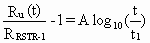
Skov and Denver (1988) found the following formula for ultimate pile capacity, Ru(t), as a function of relative time between different tests

(1)

Some designations in this formula are different from those given in the original expression. The pile capacity at the first restrike, RRSTR-1, is the lower limit for appreciable increasing in pile capacity when some time elapsed after initial driving results in developing soil set-up. Quantity, t, is a time elapsed from the end of initial driving and capacity RRSTR-1 is determined for t=t1. A factor, A, is dependent on soil conditions.

Consolidation of cohesive soils around the pile after pile installation requires much more time in comparison with other soil types like sand and gravel to regain in soil strength and pile-soil adhesion after EOID. For this reason the existing formula is pertinent for clay and cohesive soils.

Case histories presented by Svinkin et al. (1994) confirmed that formula (1) is a good indicator of the pile capacity versus relative time relationship after pile installation. Besides, it was shown that the factor, A, depends not only on the soil but also on the pile type and size.

The application of formula (1) usually requires to make the first restrike in 1-2 days after pile driving. It might be especially convenient for dynamic testing at construction sites where many piles should be tested by restrike in a short period of time.

Nevertheless, the existing formula yields relative set-up versus relative time for assessment of the pile capacity after the first restrike. This is a contradiction to the set-up approach commonly used in geotechnical practice and inconvenient for certain construction sites to restrike piles on 1-2 days after pile installation.

3 PROPOSED FORMULA

The main goal to derive a new formula for evaluation of the set-up effect of cohesive soils in pile capacity is to take into consideration the pile capacity at EOID and the actual time elapsed after pile installation.

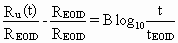
For a soil set-up straight line passing through two points corresponding pile capacity at EOID, REOID, and pile capacity at any time after pile installation, Ru(t), a formula with a logarithmic time scale can be written

(2)

Time is calculated in days after pile installation. The time for EOID is taken 0.1 (2.4 hours) that negligibly affects increasing in the pile capacity at EOID but gives an opportunity to use the logarithmic time scale.

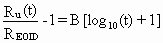
After simplification formula (2) becomes

(3)

Formula (3) is similar to formula (1). However, proposed formula (3) has certain advantages. This formula (a) uses the traditional set-up formulation, (b) takes into account the actual time in days passed after pile installation, (c) provides determination of the soil set-up independently of the time of the first restrike.

4 CASE HISTORIES

For verification of formula (3), in the following case histories the existing and proposed expressions were used to calculate the pile capacity as a function of time after EOID.

4.1 Case 1

Three piles were considered in this study from total number of seven prestressed concrete piles tested for a bridge approach (GRL Report 1987, Svinkin et al. 1994). A pile description is presented in Table 1. The depth of penetration of each pile was approximately 24.4 m. The soil consisted of about 25.6 m of mainly gray clays followed by a bearing layer of silty sand. Water table was at the ground surface. A Delmag D 46-13 hammer was employed for initial driving and restrikes. For each pile, 3 to 4 dynamic testings were performed after pile installation. For piles TP3 and TP4 static loading tests (SLT) were made as well. The elapsed time after EOID, the penetration resistance and the time dependent ultimate capacity of piles tested are shown in Table 1. Pile capacities from dynamic testings were determined by CAPWAP analysis and the Davisson criterion of failure load was used for static loading tests (GRL Manual 1993).

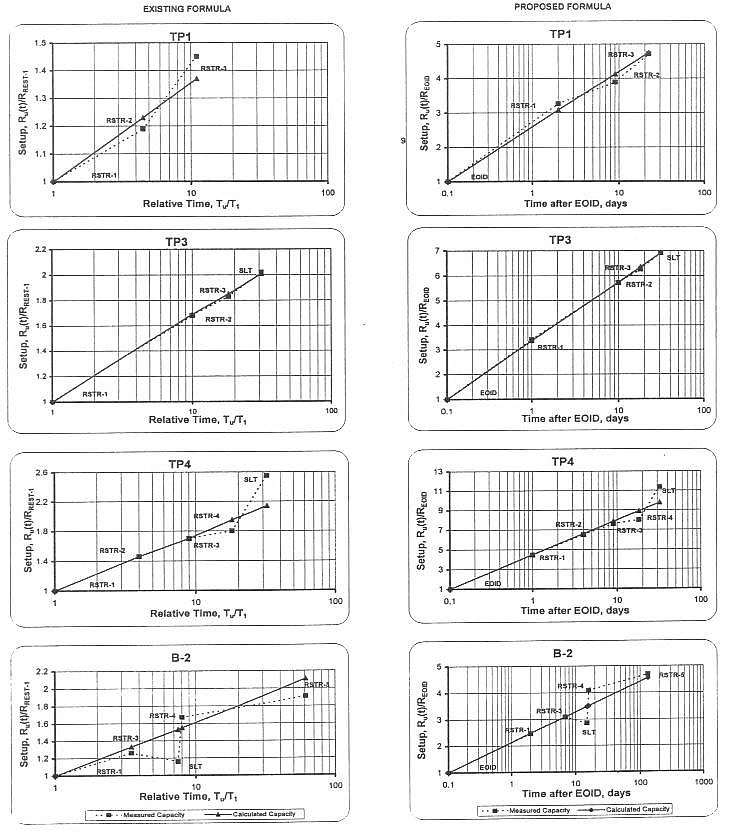
Pile capacity calculation according to formula (1) was made by Svinkin et al. (1994). Quantity, t1, was equal to 2 days for piles TP1 and 1 day for piles TP3 and TP4. Measured data and results calculated in accordance with the existing formula have been plotted in ordinates Ru(t)/RRSTR-1 and log10(t/t1) as broken and straight lines, respectively, in Figure 1. Note that the set-up coefficients from the field tests generally match well to those obtained from the existing formula.

Table 1. Static and Dynamic Data for Prestressed Concrete and Steel Piles in Clayey Soils

Pile

Test

Time after EOID (days)

Penetration Resistance (blows/0.3 m)

Ru (kN)

Factor B

Set-up Measd

Set-up Calcd

No.

Description

TP1

1372 x 127 mm

Cylinder

Prestressed

Concrete

EOID

RSTR-1

RSTR-2

RSTR-3

2

9

22

38

>240

>240

>240

752

2451

2927

3545

1.60

1

3.26

3.89

4.71

1

3.08

4.13

4.75

TP3

610 x 610 mm

(305 mm D. void)

Prestressed

Concrete

EOID

RSTR-1

RSTR-2

RSTR-3

SLT

1

10

18

31

10

21

72

144

267

912

1530

1672

1841

2.37

1

3.42

5.73

6.26

6.90

1

3.37

5.74

6.35

6.91

TP4

762 x 762 mm

(475 mm D. void)

Prestressed

Concrete

EOID

RSTR-1

RSTR-2

RSTR-3

RSTR-4

SLT

1

4

9

18

32

14

23

60

>240

168

200

890

1299

1517

1601

2273

3.50

1

4.45

6.50

7.60

8.00

11.37

1

4.45

6.61

7.84

8.90

9.77

B-2

HP 310×94

EOID

RSTR-1

RSTR-2

RSTR-3

SLT

RSTR-4

RSTR-5

2

6

7

15

16

132

12

36

60

72

48

>120

489

1201

1512

13972002

2291

1.14

1

2.46

3.09

2.86

4.09

4.69

1

2.48

3.10

3.48

3.50

4.55

  • EOID – end of initial driving
  • RSTR – restrike
  • SLT – static loading test

For piles under consideration, the factor, B, has been found on the basis of back calculations using formula (3). This factor ranges from 1.6 to 3.5 (Table 1). Scattering of the factor, B, is the same for the existing and proposed formulae. The set-up coefficients derived from both the field tests and from formula (3) are given in Table 1 and depicted in ordinates Ru(t)/REOID and Time after EOID in days (logarithmic scale) as broken and straight lines, respectively, in Figure 1. Good agreement is found between calculated and measured values of pile capacity as a function of time after EOID.

Figure 1. Pile capacity-time relationship for prestressed concrete and steel piles in clayey soils

4.2 Case 2

Initial data for this case were taken after Fellenius et al. (1989). An H-pile 310×94 (mm, kg/m) with length of 47.2 m was driven and restruck by a Vulcan 010 hammer with a nominal energy of 44 kJ. Restrike No. 4 of this pile was performed by drop hammer with nominal energy of 65 kJ. The soil at the site consisted of about 6.1 m of miscellaneous earth fill followed by about 19.8 m of soft to medium stiff compressible post-glacial silty clay and clayey silt underlain by about 27.4 m of glacial material deposited on dolomite bedrock. The water table was about 2.5 m below grade. The H-pile was founded in the glacial material.

Five restrikes were made for pile tested. Pile capacities from dynamic testings were determined by CAPWAP analysis (GRL Manual 1993). The static loading test for this pile did not show a plunging behavior. Failure load from the static loading test was 1397 kN (Davisson 1972), 1957 kN (Butler & Hoy 1977), and 2535 kN (Fuller & Hoy 1970). The capacity from the static loading test was evaluated from the Davisson criterion. The results of dynamic and static tests are shown in Table 1.

Pile capacity calculation according to formula (1) was made by Svinkin et al. (1994) and shown in Figure 1. It can be seen the calculated set-up line averages measured values of pile capacity.

Measured soil set-up and calculated set-up in accordance with formula (3) are presented in Table 1 and displayed in Figure 1 as well. For the H-pile, the proposed formula provides better fit to results tested than the existing formula.

5 SUMMARY

The application of the proposed formula shows that the magnitude of gain in pile capacity in cohesive soils depends on soil conditions, pile material and dimensions. However, the same equation with a different factor, B, can be applied for assessment of soil set-up in cohesive soils during relatively long elapsed time after pile installation.

The existing and proposed formulae demonstrate similar tendency of the set-up effect of cohesive soil in pile capacity. However, there are substantial differences between two approaches.

The existing formula yields relative set-up versus relative time for assessment of the pile capacity after the first restrike. This is a contradiction to the set-up approach commonly used in geotechnical practice. Also, it is inconvenient for certain construction sites to restrike piles on 1-2 days after pile installation. Moreover there is no standard time for the first restrike. If this time is different for various piles, the existing formula yields different assessment of soil set-up at the same site and obtained results of increasing in pile capacity cannot be compared.

The proposed formula uses the traditional set-up formulation, calculates the pile capacity at the actual time after EOID, and provides determination of the soil set-up independently of the time of the first restrike.

The proposed formula provides determination of pile capacity as a function of time after pile installation using pile capacity values obtained through dynamic testing at EOID and one restrike or one static loading test. This approach is identical for any construction site. Obtained information would be beneficial to choose sensible pile penetration depth at EOID and search the proper times in days after EOID to verify set-up in cohesive soils with an additional dynamic testing or the static loading test.

6 CONCLUSIONS

Determination of long term pile capacity is important for proper design and construction of pile foundations in cohesive soils.

A new relationship like a linear equation in a logarithmic time scale has been derived to predict an increase in pile capacity with time after pile installation. Soil set-up for several piles in cohesive soils was verified on the basis of the existing and proposed formulae. The latter has certain advantages. Obtained results showed that changes of pile capacity with time in cohesive soil may be predicted well.

Results presented in this paper certainly do not mean that pile capacity will change with time exactly like shown above. However, the demonstrated pile capacity versus time relationships can be used as guide for assessment of pile capacity with respect to time. Presented results give a chance to safe significant amount of time, energy and materials taking into account the gain of pile capacity from soil set-up. Derived relationship can also be useful in choosing representative times for both static loading test and dynamic restrike testing.

REFERENCES

  • Butler, H.D. & H.E. Hoy 1977. Users manual for the Texas quick-load method for foundation load testing. FHWA, Office of Development, Washington.
  • Davisson, M.T. 1972. High capacity piles. Proc., Lecture Series, Innovations in Foundation Construction, ASCE, Illinois Section.
  • Fellenius, B.H., R.E. Riker, A.J. O’Brien, & G.R. Tracy 1989. Dynamic and static testing in soil exhibiting set-up. Journal of Geotechnical Engineering, 115(7): 984-1001.
  • Fuller, R.M. & H.E. Hoy 1970. Pile load tests including quick -load test method, conventional methods and interpretations. HRB 333: 76-86.
  • GRL and Associates, Inc. 1993. CAPWAP – Case Pile Wave Analysis Program, Manual, Cleveland, Ohio.
  • GRL and Associates, Inc. 1987. Dynamic pile tests performed during June and July, 1987, Advance Pile Test Program, Louisiana DOT, Project No. 450-36-06, Cleveland, Ohio.
  • Randolph, M.F., J.P. Carter & C.P. Wroth 1979. Driven piles in clay – the effect of installation and subsequent consolidation. Geotechnique, 29(4): 361-393.
  • Skov, R. & H. Denver 1988. Time-dependence of bearing capacity of piles. In B. Fellenius (ed), Proc. Third Inter. Conf. on the Application of Stress-Wave Theory to Piles, Ottawa, 25-27 May: 879-888, Vancouver: BiTech Publisher.
  • Seed, H.B. & L.C. Reese 1955. The action of soft clay along friction piles. Transactions, ASCE, 122: 731-754.
  • Svinkin, M.R., C.M. Morgano & M. Morvant 1994. Pile capacity as a function of time in clayey and sandy soils. Proc. Fifth Inter. Conf. and Exhibition on Piling and Deep Foundations, Bruges, 13-15 June: 1.11.1-1.11.8, Rotterdam: Balkema.
  • Thorburn, S. & W.J. Rigden 1980. A practical study of pile behavior. Proc. 12th Annual Offshore Technology Conf., Houston.
  • Tomlinson, M.J. 1971. Some effects of pile driving on skin friction behavior of piles. Proc. Institution of Civil Engineers: 107-114, London.
  • Wardle, I.F., G. Price & T.J. Freeman 1992. Effect of time and maintained load on the ultimate capacity of piles in stiff clay. Piling: European practice and worldwide trends, Proc. Institution of Civil Engineers: 92-99, London: Telford.
Posted in Uncategorized

Prediction and Calculation of Construction Vibrations

Mark R. Svinkin
VibraConsult

This article courtesy of Dr. Mark R. Svinkin, to whom we are deeply grateful. It was originally presented at the 24th Annual Member’s Conference of the Deep Foundations Institute in Dearborn, Michigan, 14-16 October 1999.

Summary: Construction-induced vibrations may be detrimental to adjacent structures and sensitive electronics operating nearby. Construction vibration sources have a wide range of energy and velocity, as a function of time, transmitted on the ground. Analysis of existing methods for predicting ground and structure vibrations shows that empirical equations provide calculations only of amplitudes of vertical soil vibrations with insufficient accuracy. This paper presents the application of the impulse response function concept to solve the geotechnical problem of predicting ground and structure vibrations before installation of vibration sources. Impulse response functions reflect real behaviour of soil and structures without the investigation of soil and structure properties. A procedure is presented to compute predicted ground and structure vibrations. Good agreement is found between predicted and measured records.

1. Introduction

Sources of construction vibration, such as pile driving, dynamic compaction, blasting and operation of heavy construction equipment, may harmfully affect surrounding buildings and its effect ranges from serious disturbances of working conditions for sensitive devices and people to visible structural damage.

Considerable data have been collected, analysed and published with respect to vibrations from construction and industrial sources, e.g. Barkan (1962), Richart et al. (1970), Wiss (1981), Mayne (1985), Massarsch (1992), Svinkin (1993), Dowding (1996), Woods (1997) and others.

Empirical equations employed for assessment of expected soil vibrations from construction and industrial sources usually only allow calculation of a vertical peak amplitude of vibrations and not always with sufficient accuracy. These equations cannot incorporate specific differences of soil conditions at each site because heterogeneity and spatial variation of soil properties strongly affect characteristics of propagated waves in soil from construction and industrial vibration sources.

Svinkin (1996a; 1997) has originated the Impulse Response Function Prediction method (IRFP) for determining complete time domain records on existing soils, structures and equipment prior to installation of construction and industrial vibration sources. The IRFP method has significant advantages in comparison with empirical equations and analytical procedures.

The purpose of this paper is to discuss various approaches and their accuracy to predict and calculate soil and structure vibrations before the beginning of construction activities.

2. Construction Vibrations

2.1. Sources of Vibrations

Impact hammers are common sources of construction vibrations. Maximum rated energy of the most commonly employed piling hammers varies from 5 to 200 kJ per blow. Two kinds of frequencies are observed on the pile acceleration and velocity records. Vibrations with high frequencies of about 300-700 Hz are generated by the hammer-cushion system. Soil vibrations with such frequency content should be taken into account when pile driving occurs in close proximity to a building. Frequencies of natural longitudinal pile oscillations are in the range of 7-50 Hz, with predominance at the lower values. Measured maximum pile velocity and displacement values range from 0.9 to 4.6 m/s and 12 to 35 mm, respectively. Both parameters depend on pile type and hammer transferred energy. Displacement might be affected by soil conditions as well (Svinkin, 1992; 1996b).

Vibratory hammers for driving non-displacement piles usually have low to moderate force amplitudes and operating frequencies above 20 Hz. Displacement piles are driven by vibratory hammers with frequencies of around 10 Hz and commonly along with much higher force amplitudes (Warrington, 1992). The soil resistance to pile penetration and the seismic effect of vibratory driven piles depend substantially on soil conditions, pile type and vibratory hammer model. A coincidence of the operating frequency with the soil layer frequency may generate large ground vibrations of the soil surrounding the pile. The use of vibratory hammers with variable frequency and force amplitude may minimize damage due to accidental ground vibration amplification.

For dynamic compaction of loose sands and granular fills, a large steel or concrete weight of 49.1 to 137.3 kN is usually dropped from a height of 15 to 30 m. Such dynamic impacts generate surface waves with a dominant frequency of 3 to 12 Hz. Thus, dynamic deep compaction is also a source of intensive low frequency ground vibrations (Mayne, 1985).

The dominant frequency of propagating waves from quarry and construction blasting ranges mostly between 10 and 60 Hz. Blasting energy is much larger than energy of other sources of construction vibrations. For example, the energy released by 0.5 kg of TNT is 5400 kJ (Dowding, 1996). Such energy is 50 to 1000 times the energy transferred to piles during driving and 15 to 80 times the energy transferred to the ground during dynamic compaction of soils.

2.2. Ground Vibrations

Sources of construction vibrations generate compression, shear and Rayleigh waves (Barkan, 1992, Richart et al., 1970). Rayleigh waves have the largest practical interest for design engineers because building foundations are placed near the ground surface. In addition, Rayleigh waves contain roughly 70 % of the total vibration energy and become predominant over other wave types at comparatively small distances from the vibration source. For example, pile driving from depths between 4 and 10 m will generate Rayleigh waves within 0.4 to 3 m of the pile, depending on the propagation velocities of Rayleigh and compression waves.

Soil vibrations are mostly vertical near the source of vertical impact loads, but as distance increases, vertical and horizontal soil vibrations become similar in magnitudes, and, for some locations at the ground surface, the amplitude of horizontal vibrations might be up to three times greater than that of vertical vibrations. Waves travel in all directions from the source of vibrations forming a series of fairly harmonic waves with the dominant frequency equal or close to the frequency of the source. Spectra of the radial and transverse components of horizontal soil vibrations may have a few maxima and the one corresponding the frequency of the source is not always the largest. In general, faster attenuation of high frequency components is the primary cause of changes of soil vibrations with distance from the source. However, some records can not be explained by this mechanism and the effect of soil strata heterogeneity and uncertainties of the geologic profile should be taken into account (Svinkin, 1996a).

The proximity of the frequency of horizontal soil vibrations to one of the building’s natural frequencies may generate the conditions of resonance in that building. Moreover, vertical ground vibrations can cause dangerous structural settlements. Considerable data have been collected and published with respect to intolerable vibrations and settlements from construction and industrial sources, e.g. Barkan (1962), Richart et al. (1970), Wiss (1981); Lacy and Gould (1985); Massarsch (1992), Svinkin (1993); Dowding (1996) and others.

To prevent the unacceptable effect of construction vibrations, it is important to accurately predict expected ground and structure vibrations.

3. Empirical Equations

3.1. Golitsin Equation

As early as 1912, Golitsin (1912) suggested the following equation to calculate the amplitude reduction of Rayleigh waves, generated by an earthquake, between two points at distances r1 and r2 from the source as

(1)

Where

A1 = amplitude of vibrations at a distance r1 from the source
A2 = amplitude of vibrations at a distance r2 from the source
γ = attenuation coefficient.

The term (r1/r2)0.5 indicates the radiation or geometric damping and the term exp[-γ(r2-r1)] indicates the material damping of wave attenuation between two points.

Equation (1) has been originally derived to estimate the attenuation of low frequency Rayleigh waves with large wavelength for which the coefficient, γ, depends slightly on the soil upper layers properties. For such conditions, the coefficient, γ, changes reasonably in a narrow range in assessment of attenuation properties of soils.

Subsequently, in some studies, by Barkan (1962), Richart et al. (1970), Massarsch (1992), Woods (1997) and others, this equation was used for preliminary computation of ground vibrations from industrial and construction sources. Waves generated in the ground by construction sources have higher frequencies and smaller wavelength in comparison with waves from earthquakes and propagate mostly in the upper soil strata close to the ground surface. It is obvious that the coefficient, γ, is important for the accurate prediction of wave attenuation. Values of γ for various soil types can be found in the referenced publications. An experimental study to quantify of the coefficient, γ, was performed by Woods and Jedele (1985) who investigated soil damping for different construction operations at sites with soils of various stratifications. The observed data were approximated by average curves for frequencies of 5 and 50 Hz.

Nevertheless, there are some other factors that affect the coefficient, γ. Collected experimental data indicates (Svinkin, 1973; 1992) that the coefficient, γ, depends on physical parameters related to the vibration source (pile impedance, length and transferred energy to the pile, for example), frequency, distance from the source and variation of soil stratification at a site. Test data along the ground surface shows that for various pairs of widely separated points on the ground surface, values of γ can differ more than an order of magnitude and even change sign. Thus, the coefficient, γ, acceptable for small distances may be inadequate for long distances. On account of wave refraction and reflection from boundaries of diverse soil layers, an arbitrary arrangement of geophones at a site can yield incoherent results of ground vibration measurements because waveforms measured at arbitrary locations at a site might represent different soil layers. Coherent and consistent results for assessment of surface wave attenuation can be obtained on the basis of measurement of ground vibrations reflected from the same soil layer boundaries. Heisey et al. (1982) indicated certain requirements for a choice of appropriate spacing of the receivers in the application of the spectral analysis surface waves (SASW) method in the evaluation of soil properties.

One more important point. If it is possible to measure an amplitude of ground vibrations at the referenced distance r1 during construction activities, a ground vibration amplitude at a distance r2 can be measured as well. Besides, actual structure responses to ground vibrations can be measured without any prediction of expected vibrations. In the correct prediction of ground vibration amplitudes before the beginning of construction operations, the referenced amplitude is usually unknown. So, problems with uncertainty in assignment or determination of the coefficient, γ, and unknown referenced amplitude show that equation (1) cannot be used for predicting ground vibrations and the application of equation (1) to calculate of ground vibrations from construction and industrial sources may yield inaccurate results.

3.2. Scaled-Distance Approach

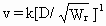
The scaled-distance approach, ground velocity-distance-energy relationship, was proposed by Attwell and Farmer (1973) to calculate the peak ground velocity at surface distance, D, from a source normalized with energy as

(2)

Where

Wr = energy of source or rated energy of impact hammer
k = value of velocity at one unit of distance.

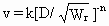
Wiss (1981) reported an identical equation

(3)

Where the value of ‘n’ yields a slope in a log-log plot between 1.0 and 2.0 with an average value of 1.5. It was an important finding because a slope of amplitude attenuation for all tested soils was in the narrow range of 1 to 2. It turned out that the scaled-distance approach was very useful in the assessment of construction vibrations. Woods and Jedele (1985) and Woods (1997) gathered data from field construction projects at which the source energy was known or could be estimated and developed a scaled distance chart that correlated with ground types. Most of these data correlated with a slope of n=1.525 for soil class II and some of the data presented in that study showed n=1.108 for soil class III.

On the basis of the actual range of energy transferred to piles and the range of the measured peak particle pile velocity at the top of steel, concrete and timber piles, the results of Woods and Jedele (1985) were adapted by Svinkin (1992; 1996b) to calculate the peak ground velocity prior to the beginning of pile driving. The peak vertical ground velocity versus scaled distance from driven piles is depicted in Fig. 1. The reasonable pile velocity range for steel, concrete, and timber piles is 4.6 to 2.4, 2.4 to 0.9 and 4.6 to 1.5 m/s, respectively. The latter is actually the same as for steel piles. Values of 4600, 2400 and 900 mm/s have been marked as extreme left values on the slope lines. There are two areas constructed on the diagram: the upper area for steel and timber piles and the lower one for concrete piles with a slope, n=1.000, which is the upper limit for the peak particle velocity with the lower value for the rate attenuation. Data presented in Fig. 1 provide an opportunity to construct curves of the expected maximum peak ground velocity for various distances from pile driving sources and different magnitudes of transferred energy. The peak particle velocity at the pile head can be calculated in advance as (Svinkin, 1996b)

(4)

where

Z = ES/c is pile impedance
E = modulus of elasticity of pile material
S = pile cross-sectional area
c = velocity of wave propagation in pile
Wr = energy transferred to the pile.

This new development of the scaled-distance approach eliminates the need to know in advance the factor, k, and enhances accuracy of predicted peak ground velocity before pile installation.

3.3. Pile Impedance

Heckman and Hagerty (1978) and Massarsch (1992) pointed out the important effect of the pile impedance on the peak ground velocity and showed that a reduction of the pile impedance from 2000 to 500 kNs/m could increase the peak ground velocity by a factor of 8 (Fig. 2). According to equation (4), the peak particle velocity of the source is inversely proportional to the square root of the pile impedance and, for the referenced impedance range, the expected amplification of the peak pile velocity and the peak ground velocity can only be 2. Equation (4) shows that pile length, velocity of wave propagation in the pile, and transferred energy also can affect the peak ground velocity by means of the wave source velocity.

The analysis of soil vibration records, measured at the same distances from a few piles with different impedances and driven by the same hammer to the same pile penetration into the ground, was conducted. It turned out that a certain range represents the effect of the pile impedance on ground vibration velocity better than a single line (Fig. 2). A lower boundary of this range can be calculated using Equation (4).

3.4. Frequency of Vibration

Frequency and peak particle velocity are basic parameters for assessment of ground vibrations. Dowding (1996) underlying the importance of frequency because structural responses depend on the frequency of ground vibrations. The dominant frequency of expected ground vibrations can be determined prior to the beginning of pile driving (Svinkin, 1992).

4. Predicting Structure Vibrations – IRFP Method

4.1. Proposed Approach

The impulse response function prediction method (IRFP) is based on the utilization of the impulse response function technique for predicting complete vibration records on existing soils, buildings and equipment prior to installation of construction and industrial vibration sources (Svinkin, 1996a; 1997). The impulse response function (IRF) is an output signal of the system based on a single instantaneous impulse input. Impulse response functions are applied in the analysis of any complicated linear dynamic system with unknown internal structure for which its mathematical description is very difficult. In the case under consideration, the dynamic system is the soil medium through which waves propagate outward from sources of construction and industrial vibrations. The input of the system is the ground at the place of pile driving, dynamic compaction of soil, or installation of a machine foundation; the output is a location of interest situated on the surface or inside the soil, or any point at a building subjected to vibrations. Outcomes can be obtained, for example, as the vibration records of displacements or velocities at locations of interest.

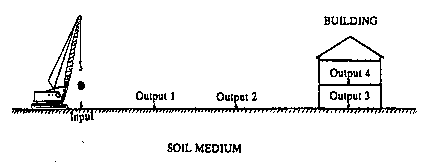
Impulse response functions of the considered dynamic system are determined by setting up an experiment (Fig. 3). Such an approach (a) does not require routine soil boring, sampling, or testing at the site where waves propagate from the vibration source, (b) eliminates the need to use mathematical models of soil profiles, foundations and structures in practical applications, and (c) provides the flexibility of considering heterogeneity and variety of soil and structural properties. Unlike analytical methods, experimental IRFs reflect real behavior of soil and structures without investigation of the soil and structure properties. Because of that, the proposed method has substantially greater capabilities in comparison with other existing methods.

The following is a general outline of the method for predicting vibrations at a distance from an impact source.

  1. At the place in the field for installation of the impact source, impacts of known magnitude are applied on the ground (Fig. 3). The impact can be created using a rigid steel sphere or pear-shaped mass falling from a bridge or mobile crane or a hammer blow on the tested pile. At the moment of impact onto the ground, oscillations are measured and recorded at the points of interest, for example, at the locations of devices sensitive to vibrations. These oscillations are the IRFs of the considered system which automatically take into account complicated soil conditions.
  2. Various ways are used to determine the dynamic loads on the ground from different vibration sources. For pile driving, dynamic loads are computed by the wave equation analysis. In the case of the operation of machines on foundations, these loads can be found using existing foundation dynamics theories. For dynamic compaction sites, loads from the source are easily calculated with known falling weights and heights.
  3. Duhamel’s integral (Smith and Domney, 1968) is used to compute predicted vibrations which will arise from operating construction impact source.

4.2. Dynamic Loads Onto Ground

Machine Foundations

Dynamic loads at a machine foundation can be found using existing foundation dynamics theories, for example Barkan (1962) and Richart et al. (1970). It is known that the equation of vertical damped vibrations of foundations for machines with dynamic loads can be written as

(5)

with

(6)

where

b = viscous damping coefficient, kN/m/s
kz = spring constant for the vertical mode of foundation vibrations, kN/cm
P(t) = exciting force, kN
M = mass of foundation and machine, t
f nz = circular natural frequency of vertical vibrations of foundation, rad/s
= effective damping constant, rad/s.

An expression derived from equation (5) for a dynamic load applied to the soil is

(7)

The dynamic force transmitted from the machine foundation to the soil depends on foundation and machine masses, the damping constant, the natural frequency of vertical foundation vibrations and vertical foundation displacements as a function of time.

Vibration displacements of the machine foundation can be assigned by sampling an arbitrary function or analytically as a damped sinusoid

(8)

with

(9)

where

IF = impulse force transmitted from machine to foundation, kNs
Φ = modulus of damping, s/rad
k= coefficient of vertical subgrade reaction, kN/m3
f
nd = circular natural frequency of vertical damped vibrations of foundation, rad/s
S1 = contact area between foundation and soil, m2.

The modulus of damping, Φ, ranges in a relatively narrow range and is slightly dependent on soil conditions (Savinov, 1979). For instance, values of Φ range from 0.004 to 0.008 s/rad for the foundation contact area less than 10.0 m2. Coefficient, kis determined according to Barkan (1962). Also, it is possible to use other approaches for determining values of α and k.

Pile driving

Equation (7) can be used to determine the dynamic loads transferred from the pile to the surrounding soil. In this case, M is the pile mass. The effective damping constant, α, is chosen from the range of damping constants for foundations with the smallest contact areas. A frequency of the hammer-pile-soil system is calculated by an equation (Svinkin, 1992) which takes into account pile material, the ratio of wave velocity in the pile to pile length and the pile weight to ram weight ratio.

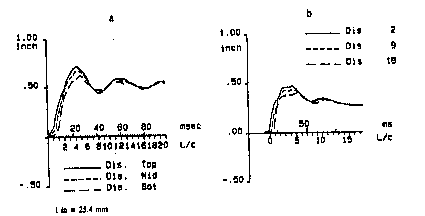
Pile displacements as a function of time are computed by the wave equation analysis, using for example, the GRLWEAP Program (GRL and Associates, 1995). Computed displacement records at the pile top, middle, and bottom are presented in Fig. 4 for a 457 mm x 457 mm prestressed concrete pile with a length of 20.4 m. These three records are very similar and displacements at the pile top can be taken as a function z(t). For comparison, pile displacements at the same points, obtained by dynamic measurement at the pile top and computed with the CAPWAP program (GRL and Associates, 1993) for the pile middle and bottom are shown in Fig. 4. Both sets of curves were derived for the same pile capacity. It can be seen that measured results confirm the reasonableness of the use of the wave equation analysis to compute pile displacements for vibration predicting.

Dynamic Compaction

For dynamic compaction of granular soil, loads from the source are calculated with known falling weights and heights.

4.3. Computation of Predicted Vibrations

For each single output point, the considered input – soil medium – output system is a one degree of freedom system and predicted displacements can be written as follows

(10)

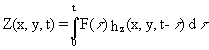
where F(τ) = the resultant dynamic force transmitted to the ground; x,y = coordinates of the output point under consideration at the ground or the structure; hz(x,y,t-τ) = impulse response function at the output point under consideration; = variable of integration.

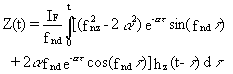
With substitution of expressions (8) and (9) equation (10) becomes

(11)

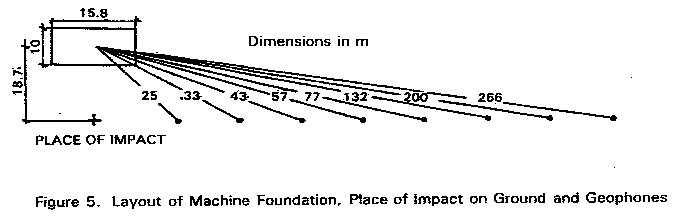
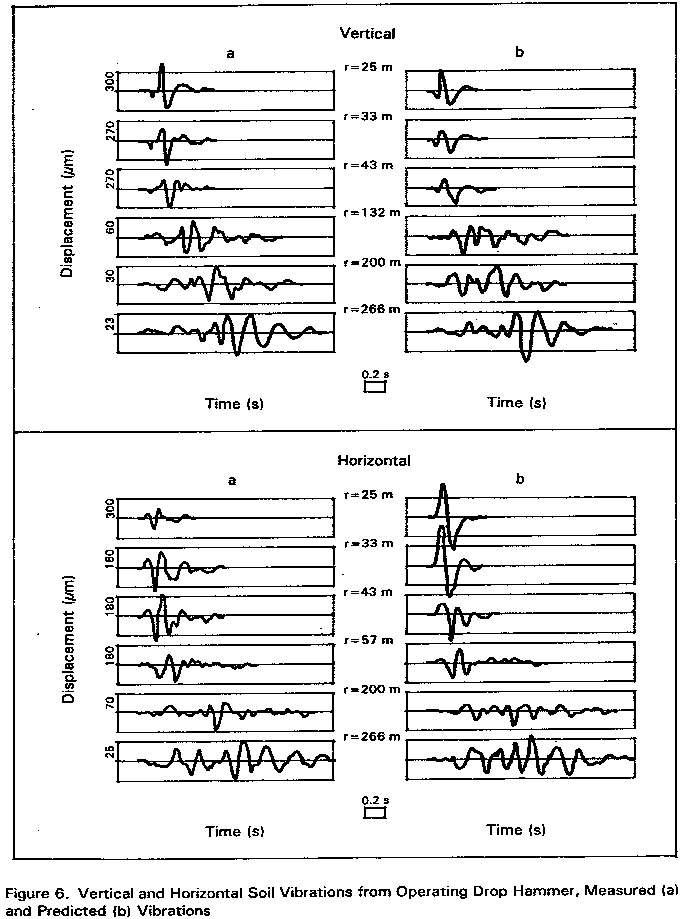
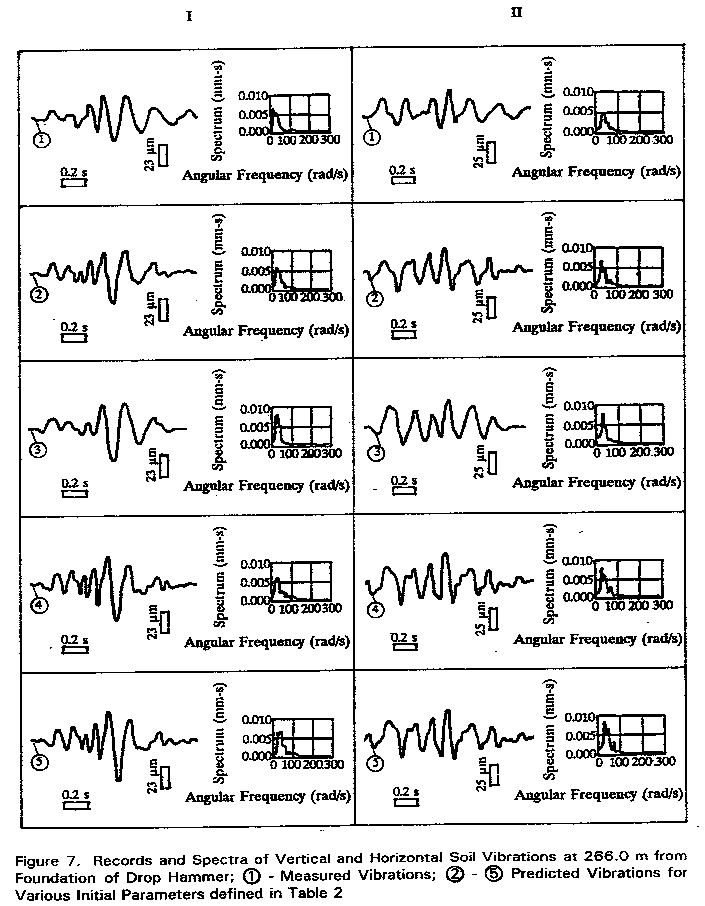
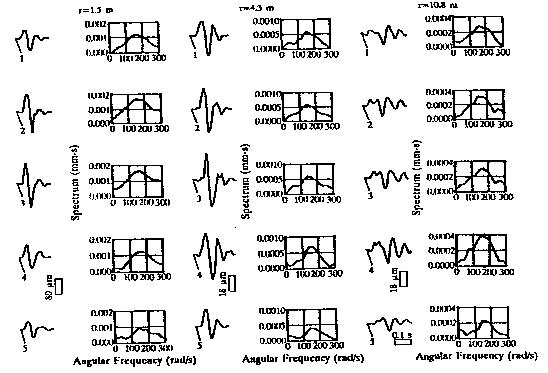
Examples of predicted results are shown in Fig. 5, 6 and 7. Measurements and prediction of vertical and horizontal ground surface displacements were made at diverse distances from the foundation under a sizeable drop hammer with a falling weight of 147.2 kN and a maximum drop height of 30.0 m. The soil at the site consisted of about 1.6 m of loose sand followed by about 6.8 m of medium density sand and 1 m of sandy clay underlain by about 10 m of slightly moist sand. The water table was about 6 m below the ground surface. The Rayleigh wave velocity was 270 m/sec. A layout of the machine foundation, the place of impact on the ground and geophones is displayed in Fig. 5.

Predicted and measured vertical and horizontal components of ground surface vibrations at eight locations are shown in Fig. 6. It can be seen that good agreement is matched in time domain vibration records, except for horizontal vibrations at two locations close to the foundation. This can be explained by the different wave paths from the foundation under the operating machine and the place for impact on the ground. The distance between these two sources was 18.7 m. Lack of coincidence of the two dynamic sources slightly affected the predicted ground vibrations at a distance from the machine foundation. Agreement of predicted and measured vibration displacements is quite satisfactory. The differences between the peak predicted and measured vibration amplitudes are less than 30 % at distances larger than 43.0 m from the foundation (Table 1). For some individual points amplitudes actually coincide.

Table 1. Peak Measured and Predicted Vibration Amplitudes
Distance from source

(m)

Vertical Horizontal
Measured

(μm)

Predicted

(μm)

Error

(%)

Measured

(μm)

Predicted

(μm)

Error

(%)

25 450 330 -27 180 510 +183
33 351 216 -38 227 396 +74
43 270 232 -14 238 252 +6
57 162 144 -11
132 55 60 +9
200 30 30 0 65 59 -9
266 28 36 +30 25 29 +16

Spectrum analysis of predicted and measured time histories revealed that both records have similar frequency domain curves with the same dominant frequency. Moreover, predicted records are slightly dependent on the parameters in equation (7) for determination of the dynamic force transmitted from the source to the soil (Svinkin, 1999).

Predicted vibration curves in Fig. 7 at a distance of 266.0 m from the machine foundation were computed with various values of initial parameters in Eq. (7), Table 2. In spite of the change of the computed natural foundation frequency in the range of 23.8-63.5 rad/s and the damping constant from 8.5 to 60.5 rad/s, the shapes of measured and predicted records are almost the same and their spectra show the same dominant vibration frequency. An increase of the computed natural frequency of foundation vibrations with respect to the measured frequency leads to an increase of the largest amplitude by 10-30 % for both vertical and horizontal predicted soil oscillations. Spectra of these oscillations show a stability of frequency composition for even very long duration soil oscillations. Thus, variations of predicted soil oscillations do not exceed measurement errors even with a 2.7 times increase in the computed natural frequency of the foundation.

TABLE 2. Parameters of Foundation-Soil System
Record No. kz

(kN/m3)

α

(rad/s)

Φ

(s/rad)

fnz

(rad/s)

M

t

2 Experimental time domain foundation displacement
3 34433 8.5 0.03 23.8 9614
4 67885 60.5 0.03 63.5 2650
5 39240 35.0 0.03 48.3 2650

5. Conclusions

  • Construction operations such as pile driving, dynamic compaction and blasting are wide-spread sources of ground and structure vibrations. These vibration sources have a wide range of energy and velocity, as a function of time, transmitted on the ground. Construction-induced vibrations may harmfully affect surrounding buildings. It is important to accurately predict vibrations of ground, structures, and sensitive devices prior to the beginning of construction activities to avoid the undesirable effect of generated vibrations.
  • Empirical equations provide only calculation of a vertical amplitude of ground vibrations and not always with sufficient accuracy. For pile driving, the scaled distance approach with calculated peak particle velocity of the source is probably the most appropriate method for predicting upper limits of the peak particle velocity of ground vibrations. The effect of pile impedance on ground vibrations is exaggerated in some publications. Other parameters of the hammer-pile-soil system like pile length, velocity of wave propagation in the pile, and transferred energy to the pile can affect the peak ground velocity as well.
  • The impulse response function prediction method (IRFP) is used to solve a geotechnical problem in predicting time domain ground and structure vibrations prior to the beginning of construction activities or installation of machine foundations.
  • The proposed approach uses the impulse response function technique for a considered dynamic system: ground at the place for the source of vibrations – soil medium – output locations of interest on the ground or in any structure receiving vibrations. Experimental impulse response functions reflect real soil behaviour and take into account uncertainty in the geologic environment. Such an approach does not require routine soil boring, sampling, and testing at the site where waves propagate from the vibration source. Different ways were shown to determine dynamic loads onto the ground from machine foundations, pile driving and dynamic compaction of granular soil. An algorithm is presented to compute predicted vibrations, and examples of predicted results are demonstrated for vertical and horizontal ground displacements. There is quite satisfactory agreement between predicted and measured records.
  • The proposed approach provides the method for determining and monitoring of ground, structures and sensitive devices vibration levels before the start of construction or industrial vibration activities.

6. Acknowledgement

The writer wishes to thank the reviewers for their constructive reviews of the paper.

7. References

  • ATTWELL, P.B. AND FARMER, I.W., 1973. Attenuation of ground vibrations from piles. Ground Engineering, Vol. 6(4), pp. 26-29.
  • BARKAN, D.D., 1962. Dynamics of bases and foundations. McGraw Hill Co., New York, 434 p.
  • DOWDING, C.H., 1996. Construction Vibrations. Prentice Hall, Upper Saddle River, 610 p.
  • GOLITSIN B.B., 1912. On dispersion and attenuation of seismic surface waves. In German, Russian Academy of Science News, Vol. 6, No. 2.
  • GRL and ASSOCIATES, INC., 1993. CAPWAP – Case Pile Wave Analysis Program, Continuous Model, Manual, Cleveland, Ohio, USA.
  • GRL and ASSOCIATES, INC., 1995. GRLWEAP – Wave Equation Analysis of Pile Driving, Manual, Cleveland, Ohio, USA.
  • HECKMAN, W.S. and HAGERTY, D.J., 1978. Vibrations associated with pile driving. American Society of Civil Engineers, ASCE Journal of the Construction Division, Vol. 104, No. CO4, pp. 385-394.
  • HEISEY, J.S., STOKOE, K.H.II, and MEYER, A.H., 1982. Moduli of pavement systems from spectral analysis of surface waves. Research Record No. 852, Transportation Research Board, pp. 22-31.
  • LACY, H.S. and GOULD, J.P., 1985. Settlement from pile driving in sands. American Society of Civil Engineers, Proceedings of ASCE Symposium on Vibration Problems in Geotechnical Engineering, Detroit, Michigan, G. Gazetas and E.T. Selig, Editors, pp. 152-173.
  • MAYNE, P.W., 1985. Ground vibrations during dynamic compaction. American Society of Civil Engineers, Proceedings of ASCE Symposium on Vibration Problems in Geotechnical Engineering, Detroit, Michigan, G. Gazetas and E.T. Selig, Editors, pp. 247-265.
  • MASSARSCH, K.R., 1992. Keynote lecture: Static and dynamic soil displacements caused by pile driving. Proceedings of the Fourth International Conference on the Application of Stress-Wave Theory to Piles, F.B.J. Barends, Editor, The Hague, The Netherlands, pp. 15-24.
  • RICHART, F.E., HALL, J.R. and WOODS, R.D., 1970. Vibrations of soils and foundations. Prentic-Hall, Inc., Englewood Cliffs, New Jersey, 414 p.
  • SAVINOV, O.A., 1979. Modern foundation structures for machines and their calculations. In Russian, Stroiizdat, Leningrad, 200 p.
  • SMITH, G.M. and DOWNEY G.L. 1968. Advanced engineering dynamics. International Textbook Company, Scranton, Pennsylvania, 440 p.
  • SVINKIN, M.R., 1973. To the calculation of soil vibrations by the empirical formulas. In Russian, Computation of building structures, Proceedings of Kharkov Scientific-Research and Design Institute for Industrial Construction, Stroiizdat, Moscow, pp. 223-230.
  • SVINKIN, M.R., 1992. Pile driving induced vibrations as a source of industrial seismology. Proceedings of the 4th International Conference on the Application of Stress-Wave Theory to Piles, The Hague, The Netherlands, F.B.J. Barends, Editor, A.A. Balkema Publishers, pp. 167-174.
  • SVINKIN, M.R., 1993. Analyzing man-made vibrations, diagnostics and monitoring. Proceedings of the 3rd International Conference on Case Histories in Geotechnical Engineering, S. Prakash, Editor, Rolla, Missouri, Vol. 1, pp. 663-670.
  • SVINKIN, M.R., 1996a. Overcoming soil uncertainty in prediction of construction and industrial vibrations. American Society of Civil Engineers, ASCE, Proceedings of Uncertainty in the Geologic Environment: From theory to Practice, Geotechnical Special Publications No. 58, C.D. Shackelford, P. Nelson, and M.J.S. Roth, Editors, Vol. 2, pp. 1178-1194.
  • SVINKIN M.R., 1996b. Velocity-impedance-energy relationships for driven piles. Proceedings of the Fifth International Conference on the Application of Stress-Wave Theory to Piles, Orlando, F. Townsend, M. Hussein and M. McVay, Editors, pp. 870-890.
  • SVINKIN, M.R., 1997. Numerical methods with experimental soil response in predicting vibrations from dynamic sources. Proceedings of the Ninth International Conference of International Association for Computer Methods and Advances in Geomechanics, Wuhan, China, J.-X. Yuan, Editor, A.A. Balkema Publishers, Vol. 3, pp. 2263-2268.
  • SVINKIN, M.R., 1999. A novel approach for estimating natural frequencies of foundation vibrations. Proceedings of 17th International Modal Analysis Conference, SEM, Kissimmee, Florida, pp. 1633-1639.
  • WARRINGTON, D.C., 1992. Vibratory and impact-vibration pile driving equipment. Pile Buck, Inc., Second October Issue, pp. 2A-28A.
  • WISS, J.F., 1981. Construction vibrations: State-of-the-Art. American Society of Civil Engineers, ASCE Journal of Geotechnical Engineering, Vol. 107, No. GT2, pp. 167-181.
  • WOODS R.D., 1997. Dynamic effects of pile installations on adjacent structures. Synthesis Report, National Cooperative Highway Research Program NCHRP Synthesis 253, Washington, D.C., 86 p.
  • WOODS, R.D. and JEDELE, L.P., 1985. Energy-attenuation relationships from construction vibrations. American Society of Civil Engineers, Proceedings of ASCE Symposium on Vibration Problems in Geotechnical Engineering, Detroit, Michigan, G. Gazetas and E.T. Selig, Editors, pp. 229-246.
Posted in Uncategorized

Modulus of elasticity and stiffness of composite hammer cushions

M.R. Svinkin
VibraConsult, Cleveland, Ohio, USA

ABSTRACT: Elastic properties of cushion materials are used to determine elastic properties of composite hammer cushions. Equivalent stiffness of the composite hammer cushion depends mostly on the characteristics of soft cushion material and only the thickness of a soft material, not the total cushion thickness, should be taken for calculations. Equivalent modulus of elasticity of the composite hammer cushion depends on the modulus of elasticity of a soft material and a ratio of stiff to soft layers thicknesses. A change of soft and stiff layers thicknesses and their ratio may be used as a tool to increase force transmitted to the pile.

1 INTRODUCTION

Hammer cushion is installed in a well on a top of the drive cap (helmet) under the anvil which is struck by the hammer ram. The drive cap is employed to hold the pile head in position under hammer and to transfer impact energy to the pile.

The hammer cushion is used for two opposite purposes. On the one hand the hammer cushion must transfer the hammer energy to the pile without excessive energy losses, but on the other hand the hammer cushion has to prevent pile and hammer damage from driving.

Various materials such as wood, rope, polymers, fibers, aluminum and others are placed in the hammer cushion well. Combination of materials, like aluminium with Conbest or micarta, are frequently used for hammer cushions (Practical guidelines 1984; GRL Manual 1997; SPS 1999; Penn State Fabricators 1999).

Laminated materials such as aluminium and Conbest or aluminium and micarta have a relatively constant elasticity during relatively long life, consistent and predictable energy transfer and more uniform driving results.

The transfer of hammer energy to the pile and protection of pile and hammer from possible damage during pile driving depend on the moduli of elasticity and the stiffness of the materials used to composite hammer cushions.

The purpose of this paper is to show how moduli of elasticity and stiffness of different laminated cushion materials effect equivalent modulus of elasticity and equivalent stiffness of the composite hammer cushions.

2 TWO CUSHION MATERIALS

A composite hammer cushion has alternate layers of soft materials like Conbest or micarta and layers of stiff materials like aluminium or steel.

Stiffness of a soft layer, ksoft, and a stiff layer, kstf, may be written

(1)

where

  • Esoft = modulus of elasticity of soft material;
  • Estf = modulus of elasticity of stiff material;
  • A = cross-section of cushion materials;
  • tsoft = thickness of soft material layer;
  • tstf = thickness of stiff material layer.

It is common that Estf is considerably greater than Esoft and tstf is equal or less than tsoft.

2.1 Equal number of layers

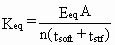
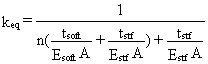
Soft and stiff material layers are in series. Therefore equivalent stiffness of the composite hammer cushion, keq, is

(2)

where

  • n = number of layers of each material;
  • remaining parameters are the same as defined previously.

Equation (2) may be rewritten as

(3)

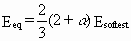
Relationship between equivalent stiffness and equivalent modulus of elasticity is

(4)

Equating the right pars of equations (3) and (4), we obtain

(5)

Equation (3) can be simplified to analyze a contribution of each cushion material to elastic properties of the composite hammer cushion. Since term tsoftEstf in the denominator of equation (3) is 30-100 times greater than term tstfEsoft, the latter term can be neglected. After simplification, equation (3) becomes

(6)

According to equation (6), equivalent stiffness of the composite hammer cushion depends on the modulus of elasticity, the layer thickness, and the cross-section of a soft material.

After analogous simplification, equation (5) takes the form

(7)

where

  • a = tstf/tsoft

It can be seen that equivalent modulus of elasticity of the composite hammer cushion depends on the modulus of elasticity of a soft material and a ratio of stiff to soft layers thicknesses.

Calculation of the equivalent stiffness and the equivalent modulus of elasticity using simplified equations (6) and (7) has an error margin about 3 % in comparison with results of equations (3) and (5).

2.2 Unequal numbers of layers

A stiff material has usually one additional layer in a combination of Conbest or micarta with aluminium. Equivalent stiffness of the composite hammer cushion, keq, can be expressed

(8)

where all parameter are as defined previously.

After transformation and simplification, equation (8) becomes equal to equation (6).

3 THREE CUSHION MATERIALS

Composite cushions of three materials like aluminium, micarta and steel rope are sometimes used. Such cushions consist of two soft and one stiff materials connected in series. Assume that each cushion material has one layer and two soft layers have the same thickness, tsoft. Also, assume a ratio of the materials moduli of elasticity as Estf>>Esoft>Esoftest, where Esoftest is modulus of elasticity of the softest material.

Equivalent stiffness of the composite hammer cushion, keq, may be written

(9)

After transformation and simplification, equation (9) takes the form

modulu9(10)

According to equation (10), equivalent stiffness of the composite hammer cushion filled with three materials depends on the modulus of elasticity of two soft materials, the thickness of a soft material layer and the cross-section of cushion materials.

Relationship between equivalent stiffness and equivalent modulus of elasticity is

modulu10(11)

Equating the right parts of equations (10) and (11), and, assume Esoft=2Esoftest for simplicity, we obtain

(12)

For assumptions taken, equivalent modulus of elasticity depends on the modulus of elasticity of the softest material and the ratio of stiff to soft layers thicknesses.

4. DISCUSSION OF RESULTS

4.1 Two cushion materials

Equivalent modulus of elasticity and equivalent stiffness of the composite hammer cushion are used in wave equation analysis of pile drivability and pile capacity. It is common that the total thickness of hammer cushion is taken for wave equation analysis.

Equation (6) shows that only the soft material effects the equivalent stiffness and only the thickness of a soft material should be used in calculations. Decreasing the total thickness of the composite hammer cushion to the actual thickness of a soft material increases force transmitted to the pile and provides more realistic consideration of hammer cushion properties in wave equation analysis of pile drivability and capacity.

According to equation (7), the ratio of stiff to soft layers thicknesses effects the equivalent modulus of elasticity. Values of Eeq are increased with increasing the aluminium or steel thickness and keeping the same Conbest or micarta thickness. For example, an enlargement of the aluminium layer thickness from 1 to 3 inches with the same Conbest thickness of 1 inch increases two times the value of Eeq.

Thus, equivalent stiffness depends on the thickness of soft cushion layers and equivalent modulus of elasticity depends on the ratio of stiff to soft layers thicknesses. Therefore a change of layers thicknesses provides certain flexibility to regulate elastic properties of the composite hammer cushions and, under certain drivability conditions, gives an opportunity to increase force transmitted to the pile for account of the layers thicknesses change instead of switching to more powerful hammer. Such a hammer will increase force transmitted down the pile in limits allowable by the pile impedance. It is reasonable to change the thickness of soft and stiff layers of the composite hammer cushion as the first step in increasing dynamic force applied to the pile.

4.2 Three cushion materials

Equivalent stiffness of the composite hammer cushion in equation (10) depends on the moduli of elasticity, the thicknesses, and the cross-section of the softest and soft material layers. According to equation (12), equivalent modulus of elasticity depends to a lesser degree on the ratio of stiff to soft layers in comparison with two cushion materials.

5 CONCLUSIONS

Proper determination of elastic properties of composite hammer cushions is important for the application of the wave equation method to piles.

Equivalent stiffness of the composite hammer cushion depends mostly on elastic properties of a soft cushion material: the modulus of elasticity, the layer thickness and the cross-section.

The total thickness of composite hammer cushion is usually taken into account for wave equation analysis of pile drivability and pile capacity. Since a soft material mostly effects the equivalent stiffness, only the thickness of a soft material should be used in calculations.

Equivalent modulus of elasticity of the composite hammer cushion depends on the modulus of elasticity of soft material and the ratio of stiff to soft layers thicknesses.

A change of soft and stiff layers thicknesses and their ratio may be used as a tool to increase force transmitted to the pile. This may improve pile drivability without switching to more powerful hammer for certain driving conditions.

REFERENCES

  • GRL and Associates, Inc. 1997. GRLWEAP – Wave Equation Analysis of Pile Driving, Manual, Cleveland, Ohio.
  • Penn State Fabricators. 1999. Conbest cushion blocks – Information, New York.
  • Practical guidelines for the selection, design and installation of piles. 1984. Committee on Deep Foundations, ASCE.
  • Specialty Piling Systems, Inc. 1999. Hammer cushion materials – Information, Slidell, Louisiana.
Posted in Uncategorized

Overcoming Soil Uncertainty in Prediction of Construction and Industrial Vibrations

Mark R. Svinkin

This article courtesy of Dr. Mark R. Svinkin, to whom we are deeply grateful. Figures supplied by the author can be viewed at the bottom of the page.

Abstract

Uncertainty in geological stratification can strongly affect the prediction of ground and structure vibrations from construction and industrial sources. This paper presents the application of the deterministic impulse response function concept to solve the geotechnical problem of prediction of ground and structure vibrations before installation of a vibration source. This approach employs experimental impulse response functions for the considered dynamic system. These functions reflect real behaviour of soil and structures without the investigation of soil and structure properties. Ways for determining dynamic loads applied to the ground from different dynamic sources are also shown. A procedure is presented to compute predicted ground and structure vibrations. Good correlation is found between predicted and measured records.

1. Introduction

Construction operations and vibrations of foundations under machines with dynamic loads generate elastic waves in soil which may adversely affect surrounding buildings. Their effects range from serious disturbance of working conditions for sensitive devices and people, to visible structural damage. The most prevalent powerful sources of construction and industrial vibrations are pile driving activities, dynamic compaction of granular soil, and vibrations of foundations for impact machines. These sources transmit predominantly vertical dynamic forces to the ground.

Analysis of experimental data (Barkan, 1962; Richart et al., 1970; Attewell and Farmer, 1973; Svinkin, 1976a; Mallard and Bastow, 1979; Woods and Jedele, 1985; Mayne, 1985) reveals that soil vibrations are mostly vertical near the sources of vertical impact loads, but at a certain distance vertical and horizontal soil vibrations become similar. For some locations on the ground surface, amplitudes of horizontal vibrations might be 2-3 times greater than vertical ones. Waves travel in all directions from the source of vibrations forming a series of fairly harmonic waves with the predominant frequency equal or close to the frequency of the source. In various soils, the basic frequency of vertical soil vibrations may either increase or decrease with distance from the source by 30-50 %. Spectra of the radial components of horizontal soil vibrations have a few maxima and the one corresponding the frequency of the source is not always the largest. The tangential components of horizontal soil vibrations have a higher frequency content as compared with radial ones. Spectra maxima of the tangential components are 2-2.5 times higher in frequency than the natural frequencies of source vibrations. In general, faster attenuation of high frequency components is the primary cause of changes of soil vibrations with distance from the source. However, some records can not be explained by this mechanism. Typical records and spectra of hammer foundation and soil vibrations from an operating forge hammer with a falling mass of 7.25 tonnes are shown on Figure 1.

Actually, a real soil medium displays some degree of elastic anisotropy and wave propagation has to be assumed to be anisotropic unless it has been shown to be effectively isotropic (Helbig, 1993). Moreover, uncertainties about the geologic profile cannot be accurately characterized, even by thorough and extensive investigations. The inherent spatial variations in the ground are not always readily identifiable by routine boring, sampling, and testing (Thorburn, 1994). For instance, Hammond (1959) reported a case history of the influence of the soil strata upon frequencies of soil vibrations and amplitudes of building vibrations at the site where a foundation was installed for a forge hammer with a falling mass of 8.0 tonnes. The main frequency of propagated waves was 22.0 Hz to the west of the hammer foundation and, at the same time, in opposite direction to the east of the source, this frequency was 10.0 Hz. Soil vibrations with the higher frequency excited resonant building oscillations.

The proximity of the frequency of horizontal soil vibrations to one of a building’s natural frequencies may generate the conditions of resonance in that building. Moreover, vertical ground vibrations can cause dangerous structural settlements. Considerable data have been collected and published with respect to intolerable vibrations and settlements from construction and industrial sources, e.g. Barkan (1962), Richart et al. (1970), Wiss (1981); Lacy and Gould (1985), Svinkin (1993); Dowding (1994) and others. To estimate the undesirable effect of generated vibrations, it is important to predict accurately and reliably vibrations of the ground, building structures and equipment.

Empirical equations are used for practical assessment of expected soil vibrations from industrial and construction sources. However, they usually allow calculation of only a vertical amplitude of the peak part of vibration records, and not always with the required accuracy. These equations cannot reflect specific differences of soil conditions at each site, even though heterogeneity and spatial variation of soil properties strongly affect characteristics of propagated waves in soil from construction and industrial vibration sources.

Complicated analytical methods (e.g. Broers and Dieterman, 1992; Hanazato and Kishida, 1992) give accurate results for certain cases, but actually these methods are mostly powerful tools for cases where quality investigations have been performed at a site. Indeed, for the prediction of expected vibrations it is necessary to have actual information about the soil deposit and to choose a proper soil model to compute vibrations. Half-space or layered media are used for idealization of existing soil conditions. Computed results contain valuable data about general tendencies of wave propagation at a site, but cannot present accurate and complete soil vibration records at any point of interest. For the use of computational methods, it is necessary to know some soil properties as, for example, shear wave velocity. Similar information is often missing for sites with a real source of vibrations. Leroueil and Tavenas (1981) demonstrated that the assumptions in analytical methods should be adequate to achieve good computed results. Besides, Thorburn (1994) underlined that “although soil variability can be expressed in terms of probability, the reliability of the theoretical models used in predictive calculations cannot be determined by probability theory”.

From the deterministic perspective, this paper deals with the application of the impulse response function concept to predict ground and structure vibrations before the beginning of construction activities or installation of machine foundations. This approach employs experimental impulse response functions reflecting real behavior of soil and structures without the investigation of soil and structure properties. It also provides an opportunity for proper determination of vibration levels and aids in monitoring of ground, structure and device vibrations prior to start of construction and industrial activities.

2. Suggested Approach

The suggested deterministic approach is founded on utilization of the impulse response function technique for predicting complete vibration records on existing soils, buildings and equipment prior to installation of construction and industrial vibration sources (Svinkin 1973a, 1991). The impulse response function (IRF) is an output signal of the system based on a single instantaneous impulse input (Mayhan, 1984; Bendat and Piersol, 1993). Impulse response functions are applied for analysis of any complicated linear dynamic system with unknown internal structure for which mathematical description is very difficult. In the case under consideration, the dynamic system is the soil medium through which waves propagate outward from sources of construction and industrial vibrations. The input of the system is the ground at the place of pile driving, dynamic compaction of soil, or installation of a machine foundation; the output is a location of interest situated on the surface or inside the soil, or any point at a building receiving vibrations. Output can be obtained, for example, as the vibration records of displacements at locations of interest.

Impulse response functions of the considered dynamic system are determined by setting up an experiment (Figure 2). Such an approach (a) does not require routine soil boring, sampling, or testing at the site where waves propagate from the vibration source, (b) eliminates the need to use mathematical models of soil bases and structures in practical applications, and (c) provides the flexibility of considering heterogeneity and variety of soil and structural properties. Unlike analytical methods, experimental IRFs reflect real behaviour of soil and structures without investigation of the soil and structure properties. Because of that, the suggested method has substantially greater capabilities in comparison with other existing methods.

The following is a general outline of the method for predicting vibrations at a distance from an impact source.

  1. At the place in the field for installation of the impact source, impacts of known magnitude are applied onto the ground (Figure 2). The impact can be created using a rigid steel sphere or pear-shaped mass falling from a bridge or mobile crane. At the moment of the impact onto the ground, oscillations are measured and recorded at the points of interest, for example, at the locations of devices sensitive to vibrations. These oscillations are the IRFs of the treated system which automatically take into account complicated soil conditions.
  2. Various ways are used to determine the dynamic loads on the ground from different vibration sources. For pile driving, dynamic loads are computed by wave equation analysis. In the case of operation of machines on foundations, these loads can be found using existing foundation dynamics theories. For dynamic compaction sites, loads from the source are easily calculated with known falling weights and heights.
  3. Duhamel’s integral (Smith and Downey, 1968) is used to compute predicted vibrations, which will arise after impact of the source.

3. Linearity of Soil Vibrations

A basic assumption of the suggested method is linearity of the soil medium where waves propagate from vibration sources. Considerable data related to linearity of the foundation-soil system have been published, for example, Barkan (1962), Bibanov et al. (1964), Sliwa (1964), Lysmer and Richart (1966), Svinkin (1973b) and others.

It is important to show that the linear technique can be used for a soil medium to predict ground vibrations at some distance from the source. For this goal, records of ground vibrations were measured at various distances from vibration sources-foundations for impact machines. Vibration records were analyzed with respect to the magnitude of excited forces applied to machine foundations. Linearity of soil medium was investigated by direct verification of the requirements of linear systems (Mayhan, 1984). Suppose, there are two records of soil displacements as functions of force z1=f(F1) and z2=f(F2). The system is linear if and only if both the property of homogeneity is satisfied

(1)

and the property of additivity is satisfied

(2)

Actually, for any linear system it is always correct to separate the excitation into an arbitrary number of parts, find the response of each separately, and add the results. This superposition technique is demonstrated in Figure 3. In this typical example, measured records of ground vibration displacements were obtained from an operating drop hammer with a falling mass of 10.0 tonnes. Velocities at the moment of impact were 6.3 and 18.8 m/s. Then, records of vibrations were redrawn in proportional scales corresponding to values of operating impulse loadings. A good correlation of compared records can be seen for each of two locations at different distances from the source. Similar results were obtained in other case histories.

Analysis of experimental studies has shown that shapes of records depend slightly on intensity of impulse loading and maxima of vibration displacements are actually proportional to values of impulse loading. These results support the application of the linear theory to describe ground vibrations excited by construction and industrial sources.

4. Impulse Response Functions

The effect of soil properties on expected vibrations at locations of interest is completely reflected in the records of IRFs obtained at the moment of impact onto the ground at the place of the vibration source. Stability of the IRFs is very important for reliable prediction of ground and structure vibrations. At the moment of impact, an inelastic collision occurs at the contact area between the falling mass and the ground. For that reason, in-situ experiments were made to investigate the effect of plastic soil deformations at the moment of impact under a falling rigid mass on ground surface vibrations (Svinkin, 1976b). Both small and large falling masses were used.

The small falling steel weight had a cylindrical shape with a 20 cm diameter and 100 kg mass. Drop heights were 0.5 and 2 m. Impacts were made by the dropping the steel mass on the same spot for various conditions at the contact area between the ground and the mass. First, impacts were applied to the ground surface. Then an excavation was dug with dimensions 0.7 x 0.7 m in a plan and 0.3 m deep. Impacts were applied to the bottom of the excavation, then onto a steel plate with spikes pressed in the soil at the bottom of the excavation, and after that, onto the sand and gravel which were used in lifts to fill the excavation. Accelerations of the falling mass and vibration displacements of the ground surface at distances of 1.5, 4.3 and 10.8 m from the contact area were measured in the experiments.

The ground vibration measurement system consisted of VAGIK or K-001 seismographs and a H-004 oscillograph with GB galvanometers. The frequency range of this system for velocity and displacement measurements was from 1.0 to 100.0 Hz. For the same values of impacts, records and spectra of ground vibrations at 1.5, 4.3, and 10.8 m from the centre of the contact area are depicted in Figure 4.

Soil conditions at the contact area influenced the duration of impacts. Acceleration impulses were close to a bell shape for impacts onto the ground surface, bottom of the excavation, gravel and steel plate. The minimum contact time of 0.025 sec was observed for an impact onto the steel plate. In the rest of the three cases, duration of contact did not exceed 0.035 sec. For an impact onto sand, contact time increased to 0.06 sec and the impulse shape was close to a shifted half-sine with its greater steepness in the leading phase. Changing the drop height from 0.5 to 2.0 m did not affect the contact time.

Shapes of records measured at each location were approximately the same for different conditions at the contact area. The predominant frequency of ground vibrations, approximately 160.0 rad/sec, turned out to be independent of conditions at the contact area. In fact, an increase of duration of the bell-shaped impulse from 0.025 to 0.035 sec did not significantly change the amplitudes of ground vibrations. Thus, at distances of 4.3 and 10.8 m these amplitudes differed by only 5-8 % (Fig. 4, records 1-4). Enhancement of low-frequency components of the half-sine shaped acceleration impulse had only a weak effect on the frequency content of ground vibrations (Fig. 4, record 5). In the proximity of the contact area (r=1.5 m), an increase of impulse duration to 0.06 sec diminished the amplitudes of ground vibrations to 50-70 % as compared with other conditions at the contact area. However, moving further from the place of impact, this difference decreased to 20-35 % and 10-25 % for r=4.3 and 10.8 m, respectively. The distances of 4.3 and 10.8 m were 40-100 times greater than the radius of the contact area between the falling weight and the ground. Thus, at the locations in the proximity of the place of impact, amplitudes of ground vibrations decreased with an increase in impulse duration, but these changes decreased with distance from the contact area.

The effect of large plastic soil deformations at the contact area under a falling mass on ground vibrations was studied with a falling mass of 15.0 tonnes at a site where soil deposits were mostly fine moist sands. The drop height ranged from 10 to 15 m. Many impacts were performed at the same spot; consequently, large plastic soil deformations occurred at the point of impact. Records of ground vibration displacements at various distances from the place of impact onto the ground are depicted in Figure 5.

Comparison was made for records obtained for two equal impacts with different degrees of plastic soil deformations at the contact area. In particular, vibrations were measured at distance of 43 m for the first and ninth impacts, and at a distance of 57 m for the first and seventeenth impacts. For the first impact, the falling mass dropped onto a flat ground surface, but for the seventeenth impact, it dropped into a pit deeper than 1 m. In spite of considerable soil deformations at the contact area, each pair of ground surface vibrations are similar at locations of measurements. The results demonstrate that at any location on the ground, except probably a zone at close proximity to the source, soil vibration displacements measured simultaneously with impact onto the ground are stable, have well-defined shapes, are independent from the intensity of soil deformations at the contact area. The differences between displacement amplitudes measured during various impacts are within the limits of error of the measurement system. This confirms the reliability of using a deterministic perspective for prediction of construction and industrial vibrations.

Based on the experimental program described above, it has been shown that impacts directly onto the soil can be used for deriving impulse response functions of the considered dynamic system: the base under the source of vibrations – soil medium – ground or structure at some distance from the source.

5. Dynamic Loads Onto Ground

5.1 Machine Foundations

Dynamic loads at a machine foundation can be found using existing foundation dynamics theories, for example Barkan (1962) and Richart et al. (1970). It is known that the equation of vertical damped vibrations of foundations for machines with dynamic loads can be written as

(3)

with

(4)

where c = viscous damping coefficient; kz = spring constant for the vertical mode of foundation vibrations; P(t) = exciting force; M = mass of foundation and machine; /nz = natural frequency of vertical vibrations of foundation; a = effective damping constant.

An expression derived from equation (3) for a dynamic load applied to the soil is

(5)

The dynamic force transmitted from the machine foundation to the soil base depends on the foundation and machine mass, the damping constant, natural frequency of vertical foundation vibrations and vertical foundation displacements as a function of time.

Vibration displacements of the machine foundation can be assigned digitally by using an arbitrary shape or analytically as a damped sinusoid

(6)

with

(7)

where IF = impulse force transmitted from machine to foundation; F = modulus of damping; kzN = coefficient of vertical subgrade reaction; /nd = natural frequency of vertical damped vibrations of foundation; A = contact area between foundation and soil.

As suggested by Pavliuk and Kondin (1936), the modulus of damping, F, ranges in a relatively narrow range and is slightly dependent on soil conditions. For instance, values of F ranges from 0.004 to 0.008 sec for foundations with contact areas less than 10.0 m2. Coefficient, kzN is determined according to Barkan (1962). Also, it is possible to use other approaches for determining values of a and kzN.

5.2 Pile driving

Equation (5) can be used for determination of the dynamic loads transferred from the pile to the surrounding soil. In this case, M is the pile mass. The effective damping constant, a, is chosen from the range of damping constants for foundations with the smallest contact areas. A frequency of the hammer-pile-soil system is calculated by an equation (Svinkin, 1992) which takes into account pile material, the ratio of wave velocity in the pile to pile length and the pile weight to ram weight ratio.

Pile displacements as a function of time are computed by wave equation analysis, using for example, GRLWEAP Program (GRL and Associates, 1995). Computed displacement records at the pile top, middle, and bottom are presented in Figure 6 for a 457 x 457 mm prestressed concrete pile with length of 20.4 m. These three records are very similar and displacements at the pile top can be taken as a function z(t). For comparison, pile displacements at the same points, obtained by dynamic measurement at the pile top and by Case Pile Wave Analysis Program (CAPWAP) for the pile middle and bottom are shown in Figure 6. Both sets of curves were derived for the same pile capacity. It can be seen that measured results confirm the reasonableness of the use of wave equation analysis to compute pile displacements for vibration prediction.

5.3 Dynamic Compaction

For dynamic compaction of granular soil, loads from the source are calculated with known falling weights and heights.

6. Computation of Predicted Vibrations

For each single output point, the considered input – soil medium – output system is a one degree of freedom system and predicted displacements can be written as follows

(8)

where F(t) = the resultant dynamic force transmitted to the ground; x,y = coordinates of the output point under consideration at ground or structure; hz(x,y,t-t) = impulse response function at the output point under consideration; t = variable of integration.

With substitution of expression (5) and (6) equation (8) becomes

(9)

An example of predicted results is shown in Figure 7. Vertical and horizontal ground displacements were predicted at a distance of 266.0 m from the foundation under a powerful drop hammer at a site with the Rayleigh-wave velocity of 270 m/sec. The falling mass was 15.0 tonnes and the maximum drop height was 30.0 m. For both vertical and horizontal displacement components, three records are depicted: IRF, predicted, and measured curves. It can be seen that the IRFs make a substantial contribution to the actual vibrations, reflecting a very close record shapes to the measured ones. Correlation of predicted and measured vibration displacements is quite satisfactory. The differences between the highest calculated and measured amplitudes of oscillations are 16 and 30 % for horizontal and vertical components, respectively.

In current practice, the amplitude reduction of Rayleigh waves between two points at distances r1 and r2 from the source is calculated as (r1/r2)0.5 with a factor exp[-a(r2-r1)], where a is the coefficient of attenuation. The coefficient, a, depends on soil properties, on parameters of the source, on frequency and distance from the source. Test data along the ground surface show that for various pairs of widely separated points on the ground surface, values of a differ more than an order magnitude and even change a sign. Calculated maximum response is in the range of -100 to 330 %.

Unlike current practice, the suggested method predicts complete 3-D waveforms, vertical and two horizontal, with reasonable accuracy actual performance (an example demonstrates vertical and one horizontal waveforms). The best index of the reliability of the method is the comparison of computed and measured records. It was successfully done using the IRF concept.

7. Conclusions

The impulse response function concept is used to solve a geotechnical problem to predict ground and structure vibrations prior to the beginning of construction activities or installation of machine foundations.

The suggested deterministic approach uses the impulse response function technique for a considered dynamic system: ground at the place for the source of vibrations – soil medium – output locations of interest on ground or in any structure receiving vibrations. Experimental impulse response functions reflect real soil behavior and take into account uncertainty in the geologic environment. Such an approach does not require routine soil boring, sampling, and testing at the site where waves propagate from the vibration source. On the basis of experiments it was proved that impacts directly onto the soil can be used for deriving impulse response functions for the considered dynamic system.

Different ways were shown to determine dynamic loads onto the ground from machine foundations, pile driving and dynamic compaction of granular soil. An algorithm is presented to compute predicted vibrations, and an example of predicted results are demonstrated for vertical and horizontal ground displacements. There is quite satisfactory correlation between predicted and measured records.

The suggested approach provides the method for determining and monitoring of ground, structures and sensitive devices vibration level before the start of construction or industrial vibration activities.

Acknowledgements

The writer is grateful to Professor Richard D. Woods for many valuable comments and suggestions for the manuscript. The writer wishes to thank the reviewers for their constructive reviews of the manuscript.

APPENDIX. REFERENCES

  • Attewell, P.B. and Farmer, I.W. (1973). “Attenuation of ground vibrations from piles.” Ground Engrg., 6(4), 26-29.
  • Barkan, D.D. (1962). Dynamics of bases and foundations. McGraw Hill Co., New York, 434.
  • Bendat, J.S and Piersol, A.G. (1993). Engineering applications of correlation and spectral analysis. John Wiley & Sons, Inc., 458.
  • Bibanov, V.I., Goncharov, L.A., Konstantinov, B.B., Krasnikov, N.D., and Tishenko, V.G. (1964). “Experimental investigations of vibrations of massive concrete blocks on sandy base” (in Russian). Questions of Engrg. Seismology, Proc. of Institute of Earth Physics, Vol. 9, “Nauka”, Moscow.
  • Broers, H. and Dieterman H.A. (1992). “Environmental impact of pile-driving.” Proc., 4th Intern. Conf. on Application of Stress Wave Theory to Piles, F.B.J. Barends, ed., A.A. Balkema, The Hague, The Netherlands, 61-68.
  • Dowding, C.H. (1994). “Vibration induced settlement from blast densification and pile driving.” Proc., ASCE Settlement ’94, Vertical and Horizontal Deformations of Foundations and Embankments, Vol. 2, 1672-1688.
  • GRL and Associates, Inc. (1993). CAPWAP- Case Pile Wave Analysis Program, Continuous Model, Manual. Cleveland, Ohio, USA.
  • GRL and Associates, Inc. (1995). GRLWEAP- Wave Equation Analysis of Pile Driving, Manual. Cleveland, Ohio, USA.
  • Hammond, R.E.R. (1959). “Vibration-controlled foundations at Salten.” Iron and Steel, Vol. 32, No. 3.
  • Hanazato, T. and Kishida, H. (1992). Analysis of ground vibrations generated by pile driving – Application of pile driving analysis to environmental problem.” Proc., 4th Intern. Conf. on Application of Stress Wave Theory to Piles, F.B.J. Barends, ed., A.A. Balkema, The Hague, The Netherlands, 105-110.
  • Helbig, K. (1993). “Simultaneous observation of seismic waves of different polarization indicates subsurface anisotropy and might help to unravel its cause.” J. Applied Geophysics, Vol. 30, 1-24.
  • Lacy, H.S. and Gould, J.P. (1985). “Settlement from pile driving in sands.” Proc., ASCE Symposium on Vibration Problems in Geotech. Engrg., Detroit, Michigan, 152-173.
  • Leroueil, S. and Tavenas, F. (1981). “Pitfalls of back-analysis.” 10th Inter. Conf. on Soil Mechanics and Foundation Engrg., Stockholm, Vol. 1, 185-190.
  • Lysmer, J and Richart F.E. Jr. (1966). “Dynamic response of footings to vertical loading.” J. Soil Mech. and Found. Div., ASCE, 92, No. SM 1, 65-91.
  • Mallard, D.J. and Bastow, P. (1979). “Some observations on the vibrations caused by pile driving.” Proc., Conf. on Recent Developments in the Design and Construction of Piles, ICE, Thomas Telford Ltd, London, 261-284.
  • Mayhan, R.J. (1984). Discrete-time and continuous-time linear systems. Addison-Wesley Publishing Co., 644.
  • Mayne, P.W. (1985). “Ground vibrations during dynamic compaction.” Proc., ASCE Symposium on Vibration Problems in Geotech. Engrg., Detroit, Michigan, 247-265.
  • Pavliuk, N.P. and Kondin, A.D. (1936). “Damping of vibrations of foundations under machinery” (in Russian). Proekt i Standart, No. 11.
  • Richart, F.E., Hall, J.R. and Woods, R.D. (1970). Vibrations of soils and foundations. Prentic-Hall, Inc., Englewood Cliffs, NJ, 414.
  • Sliwa, G. (1964). “Some dynamic problems of foundations under drop hammers” (in Polish). Zesk. Nauk. Politechn, Slaskiej, No. 107.
  • Smith, G.M. and Downey G.L. (1968). Advanced engineering dynamics. International Textbook Company, Scranton, Pennsylvania, 440.
  • Svinkin, M.R. (1973a). “Prediction of soil oscillations from machine foundation vibrations” (in Russian). Dynamics of structures, Proc., Kharkov Scientific-Research and Design Inst. for Industrial Constr., Budivelnic, Kiev, 53-65.
  • Svinkin, M.R. (1973b). “On linearity of soil bases and machine foundations” (in Russian). Dynamics of structures, Proc., Kharkov Scientific-Research and Design Inst. for Industrial Constr., Budivelnic, Kiev, 44-52.
  • Svinkin, M.R. (1976a). “Some features of soil vibrations due to effect of operating machines producing impact loads” (in Russian). Dynamic of Building Structures, Proc. Leningrad Design Institute for Industrial Construction, Leningrad, 57-66.
  • Svinkin, M.R. (1976b). “Experimental investigations of soil vibrations under impulse force” (in Russian). Dynamics of Structures, Proc. of the Kharkov Scientific-Research and Design Institute for Industrial Construction, Budivelnic, Kiev, 15-23.
  • Svinkin, M.R. (1991). “Predicting vibrations of soil and buildings excited by machine foundations under dynamic loads.” Proc., 2nd Inter. Conf. on Recent Advances in Geotechn. Engrg. and Soil Dynamics, University of Missouri-Rolla, Rolla, Mo., Vol. 2, 1435-1441.
  • Svinkin, M.R. (1992). “Pile driving induced vibrations as a source of industrial seismology.” Proc. 4th Inter. Conf. on the Application of Stress-Wave Theory to Piles, F.B.J. Barends, ed., A.A. Balkema, The Hague, The Netherlands, 167-174.
  • Svinkin, M.R. (1993). “Analyzing man-made vibrations, diagnostics and monitoring.” Proc., 3rd Inter. Conf. on Case Histories in Geotechn. Engrg., University of Missouri-Rolla, Rolla, Mo., Vol. 1, 663-670.
  • Thorburn, S. (1994). “Uncertainty and judgement in geotechnical engineering.” Ground Engrg., Vol. 27, No.3, 18-22.
  • Wiss, J.F. (1981). “Construction vibrations: State-of-the-Art.” J. Geotech. Engrg., ASCE,Vol. 107, No. GT2, 167-181.
  • Woods, R.D. and Jedele, L.P. (1985). “Energy-attenuation relationships from construction vibrations.” Proc., ASCE Symposium on Vibration Problems in Geotech. Engrg., Detroit, Michigan, 229-246.

svk1.gif (10491 bytes)

FIG. 1. Displacement Records and Spectra of (1) Forge Hammer Foundation and (2-9) Ground Vibrations: 1-5 – Vertical Component, 6 – Horizontal Tangential Component, 7-9 – Horizontal Radial Component

svk2.gif (1937 bytes)

FIG. 2. Experimental Determination of Impulse Response Functions

svk3.gif (1576 bytes)

FIG. 3. Linearity of Vertical Ground Vibrations at Distances of (a) 6.0 m and (b) 53.0 m from Source for Different Impact Velocity of Hammer Falling Mass

svk4.gif (9139 bytes)

FIG. 4. Displacement Records and Spectra of Vertical Ground Vibrations for Various Conditions at Contact Area: 1 – Ground Surface, 2 – Bottom of Excavation, 3 – Gravel, 4 – Steel Plate, 5 – Sand

svk5.gif (4268 bytes)

FIG. 5. Comparison of Two Different Displacement Records of Ground Vibrations in Fine Sands for Identical Impacts onto Ground by Falling Mass of 15.0 tonnes

svk6.gif (2518 bytes)

FIG. 6. Displacements at Pile Top, Middle and Bottom during Driving: a – Computed by GRLWEAP, b – Measured at Pile Top and Obtained by CAPWAP Analysis at Pile Middle and Bottom

svk7.gif (6720 bytes)

FIG. 7. Displacement Records of (a) Vertical and (b) Horizontal Ground Vibrations at Distance of 266.0 m from the Drop Hammer Foundation (m = 15 tonnes, h = 30 m): 1 – Impulse Response Function, 2 – Predicted Record, 3 – Measured Record