
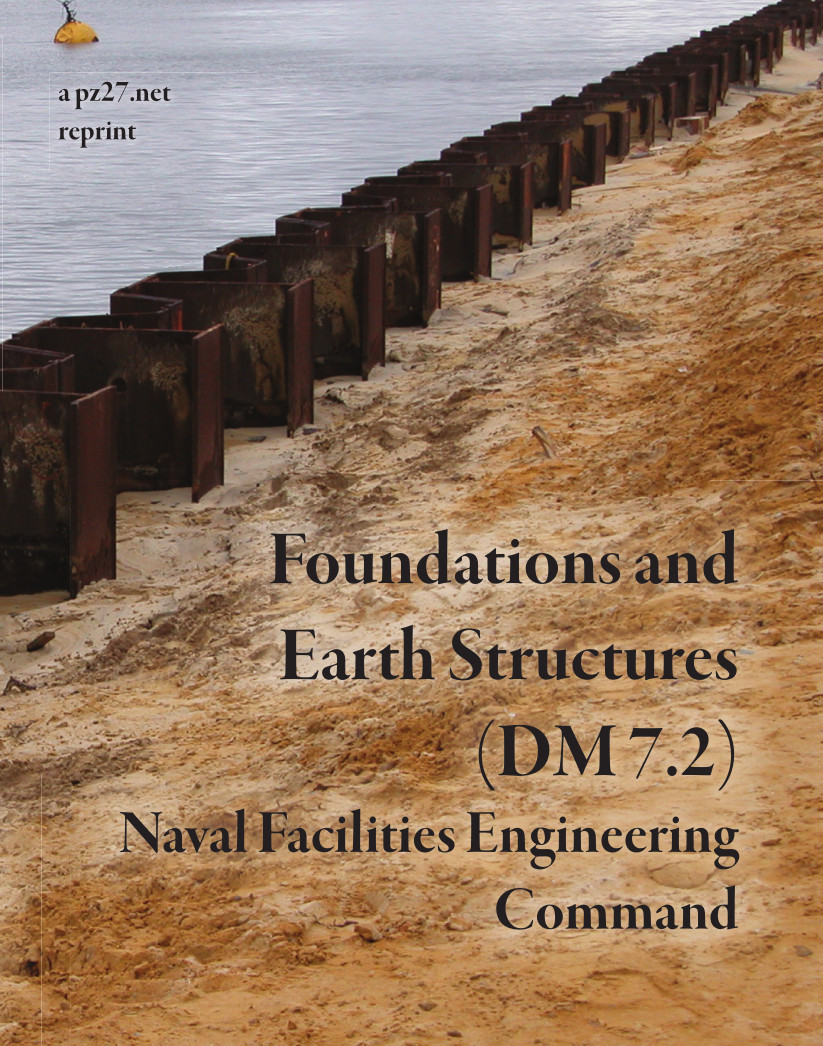
This week we’ll look at Chapter 2 of the new NAVFAC DM 7.2, which covers excavations.
Vertical Excavations in Clay Soils
The chapter starts with Open-Cut Excavations, which gets into the issue of slope stability. That was covered in NAVFAC DM 7.1, but they make one mistake which needs some explanation. Their formula for the critical height of clay soils is the upper bound solution, namely

where su is the undrained shear strength of the clay and 
OSHA Trenching Standards
When I first became involved in Soils in Construction over twenty years ago, one of the recommendations from our reviewers for the Fifth Edition was that we include the OSHA trenching and shoring requirements. We did that and it made for a better book. NAVFAC DM 7.2 has updated that, also making for a better book and bringing the document in line with current practice. Trench collapses are preventable; this will help disseminate information on how to keep them from happening.
Deep Excavation Systems
The state of the practice in this field has brought many advances, and many of these are covered in this section of the book. This includes such things as king pile systems (which are featured on the cover of the book) and various types of support systems other than the venerable braced cuts, such as tiebacks and soil nails. The focus of the chapter on braced cuts is on settlement issues; the issues of lateral pressures are covered in Chapter 4.
Underpinning, Dewatering and Rock Excavation
These topics take up the rest of the chapter. Although much of this is qualitative, the underpinning section deals with more quantitative methods of estimating movements that would require underpinning of an adjacent foundation. The other sections are excellent and a good update both graphically and informationally. Dewatering is very job-specific and, given the uncertainties surrounding permeability, is still something of an art (although application of numerical methods will certainly shift it to a more analytical pursuit.)

 vulcanhammer.net